
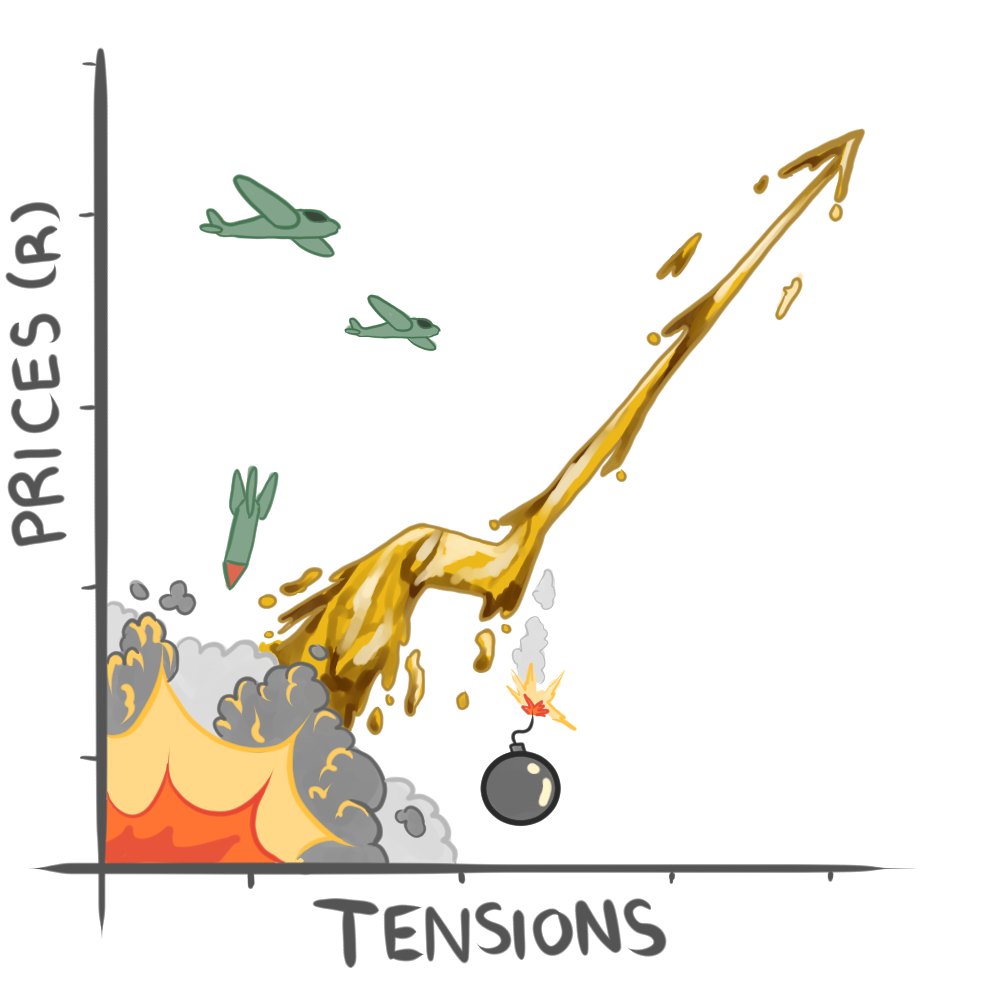
Most university students have had this moment. You are standing at the till, watching the total climb higher than you expected. You pause, maybe put something back, maybe swipe anyway and deal with the stress later. You walk out thinking, “Everything is just getting expensive.” But what if that moment is not random? What if it is not just “the economy”, but something much bigger quietly shaping your day?
As a student, it is easy to treat politics like background noise. It is something that feels far removed from lectures and deadlines, and you are just trying to make it through the month. But even in that distance, there is a contradiction. In a recent PDBY Instagram poll, only 38% of students said they feel informed about how international politics affects their daily lives. Another 35% said somewhat, and 28% said not at all. Yet when asked whether rising prices have changed how they live, 76% said absolutely. So even if you feel unsure about politics, you are already feeling its effects.
Take petrol prices. When they go up, it feels frustrating but distant, like something you cannot control. According to the International Energy Agency, global oil markets are highly sensitive to political conflict. The Russia-Ukraine war in 2022 disrupted a major energy supply chain, reducing supply and pushing prices up worldwide. Because South Africa relies heavily on imported fuel, those increases reach the country quickly.
Now follow that one change. Higher fuel prices mean it costs more to transport goods. That includes groceries, takeaways, and even the cost of getting to campus. Businesses adjust their prices to keep up, and suddenly, your grocery bill is higher. Nothing about your routine has changed, but your money does not stretch the way it used to.
Students are feeling this in very real ways. In the same poll, 37% said groceries affect them most, 32% pointed to petrol, and 26% said everything just feels expensive. This reflects the data from Statistics South Africa, which shows that food and transport are among the fastest-rising costs. That feeling at the till is not imagined. It is part of a wider pattern shaped by forces beyond your control.
The rand adds another layer to this. When people say the rand is weak, it can sound distant, but it has direct consequences. The World Bank notes that global instability, especially in regions such as the Middle East, often leads to price fluctuations that affect developing economies more severely. When the rand weakens, imports become more expensive. That includes fuel and food, which pushes prices even higher.
For students, this hits differently. Most are already working with a fixed amount of money. Whether it is financial aid, support from home, or a part-time job, there is little room to absorb rising costs. When prices increase, something has to change. You buy less, cut back, and start thinking twice about things that once felt routine.
What makes this worth paying attention to is not only the impact, but the awareness. Politics is shaping your daily life, whether you are following it or not. It is there in the cost of transport, in the price of food, and in the constant effort to make your budget last.
Understanding that does not remove the pressure, but it changes how you see it. Financial stress begins to make sense in a wider context. You start to realise that your experience is shared, and that it is connected to decisions being made far beyond your control.
Politics is not distant or abstract. It is already part of your life. You feel it every time you swipe your card, every time you adjust your budget, and every time you wonder why things keep getting more expensive. And once you see that, it becomes harder to ignore.
Visual: Gabriella le Roux
