
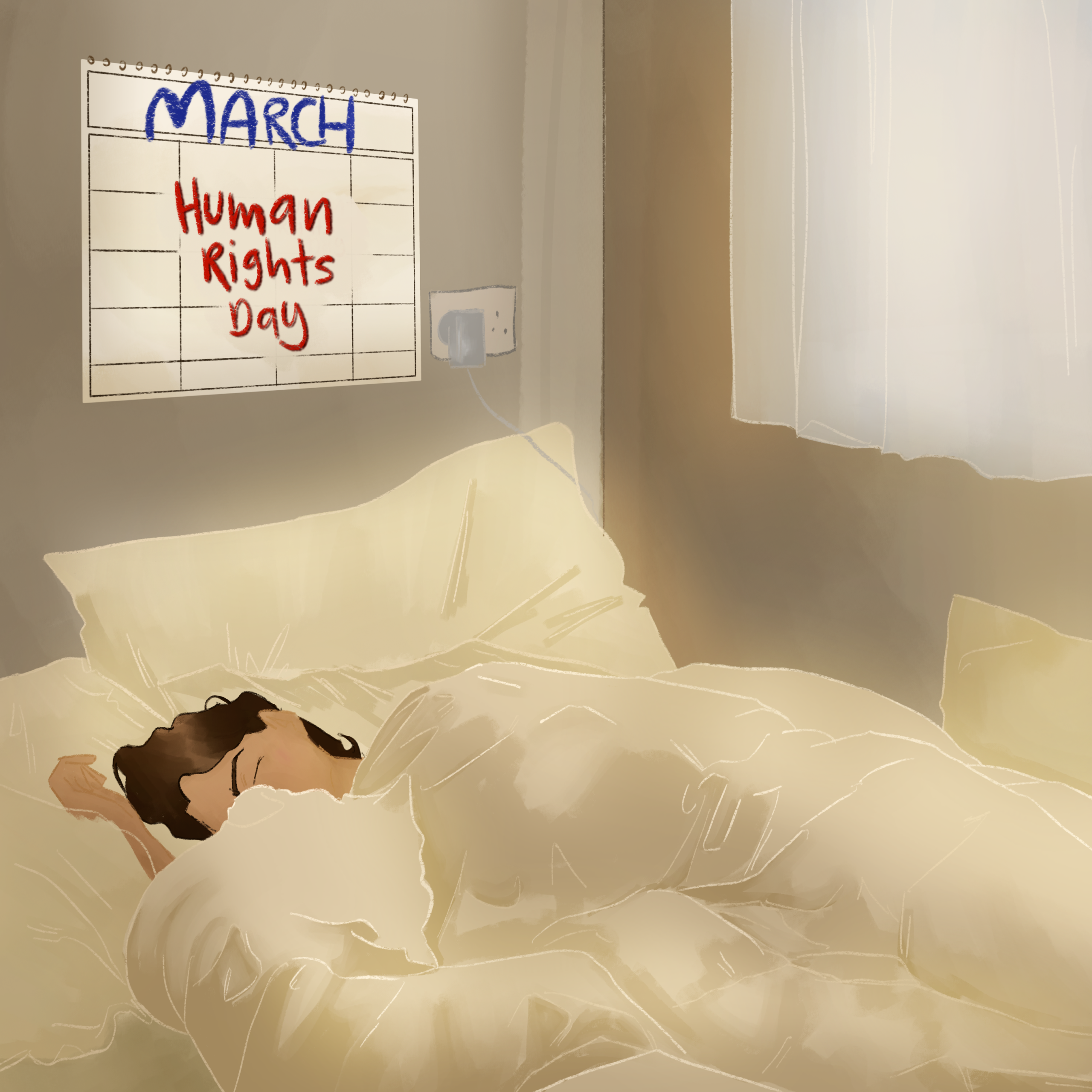
When Human Rights Day fell on a Saturday this year, it barely made a dent in student life. There was no long weekend, and no pause for test week. For most students, 21 March slipped by quietly. It was just another day to sleep in, catch up on assignments, or meet up with friends. And in that quiet passing, something more meaningful seemed to fade with it.
Human Rights Day exists to remember the lives lost in the Sharpeville and Langa massacres of 1960 and 1985 respectively where significant moments of ordinary people who stood up against apartheid occurred and were met with violence. As noted by South African History Online, these events became a turning point in the liberation struggle of South Africa. But beyond the history books, they are stories of real people – people who fought, resisted, and paid the ultimate price for rights many now move through without thinking twice.
And yet, on campus, that weight does not always land. Student life moves fast. There is always something due and something demanding your attention. In that kind of environment, it is easy for something like Human Rights Day to feel distant, especially when it does not come with a break. Public holidays, for many students, have quietly become less about remembrance and more about relief. A day off means rest or catching up. When that “pause” is not built in, the day itself can start to feel optional.
It is not that students do not care. It is that life does not always make space for caring in the ways we expect it to.
Studies and insights from organisations like Statistics South Africa suggest that younger generations often engage with history in limited, surface-level ways, usually tied to school or university requirements. Names like Sharpeville are familiar, but the depth of those moments can feel far removed from everyday life. History becomes something to pass, not something to carry.
That is where public holidays are supposed to come in. They interrupt the routine. They force a pause. They remind people collectively that the present did not just happen; it was fought for. But when that interruption disappears, like it did this year, the responsibility quietly shifts. Remembering becomes a choice, not something structured into the day.
And that is where things get uncomfortable. Because if the meaning of these days only shows up when they come with a break, then what does that say about how we value them?
At the same time, this moment opens up something important. It asks students to see themselves differently; not as people separate from history, but as part of it. The freedoms that shape university life today, such as the ability to study and to speak freely, are tied directly to the struggles remembered on days like 21 March. That connection is not abstract; it is lived, even if it is not always recognised.
Engaging with that does not have to be dramatic. It can be as simple as having conversations that go a bit deeper, or even just taking a moment to sit with what the day represents. It is about intention more than anything else.
Because the truth is, Human Rights Day does not lose its meaning just because it falls on a weekend. The real question is whether that meaning is something students are willing to hold onto on their own terms, even when the calendar does not force them to.
If not, then it is worth asking: was it ever really about the day, or just the day off?
Visual: Amy Lamplough
