

Three thousand years after Homer’s epics were first sung, Helen of Troy remains remarkably good at starting conflict. The latest battlefield is Christopher Nolan’s The Odyssey, which has reignited an old argument about who gets to play the mythical “face that launched a thousand ships”. Fueled by figures like Elon Musk, Lupita Nyong’o’s casting as Helen has attracted backlash from various corners of the internet, raising familiar complaints about “historical accuracy” and “woke” casting. Suddenly, a character who exists somewhere between myth, poetry, and history has become another front in the internet’s seemingly endless culture wars.
But perhaps the strangest thing about all of this is that Helen has never actually belonged to one definitive image. Homer does not give an exact description for Helen. The mythology surrounding her has been retold, rewritten, and reimagined for centuries, with different translations creating their own versions of what she looks like and, more importantly, what she represents. Yet every new adaption seems to invite the same question: is this actress the Helen of Troy?
The answer should probably be that there is no the Helen of Troy.
In Greek Mythology, Helen is the daughter of Zeus, the man who turned himself into a swan to trick and mate with Leda, Queen of Sparta. Leda then laid an egg, and Helen hatched from it. To demand “accuracy” for a character who is literally half-bird seems insane. Homer’s descriptions of Helen are generic “beautiful-haired” and “white-armed”, terms more around class definition than race. “White-armed” is a high-status social and beauty marker. It described women and goddesses who had unblemished skin because they did not work outdoors in the sun. Nolan’s film also stars Matt Damon as Odysseus, and no one is seriously arguing that the Massachusetts-born actor is the spitting image of a Bronze Age Ithacan king. I mean, Matt Damon’s entire filmography is just him desperately trying to get home to Ben Affleck (which could mean nothing).
The casting of Nyong’o only becomes a problem if we accept that whiteness is the default for beauty: a deeply problematic premise that the backlash inadvertently exposes.
The controversy over Helen’s appearance is merely the latest chapter in a much older story. The obsession with Helen’s beauty has a darker, more uncomfortable consequence. Since The Iliad, Helen has served as the ultimate scapegoat for male violence. Her abduction (or elopement, depending on the translation) launched a thousand ships and a decade of bloodshed, and she has been blamed for it ever since. By framing her as a passive victim whose beauty is a destructive force, patriarchal narratives absolve the male characters such as Menelaus, Paris, Agamemnon, and Achilles of their own agency in choosing to go to war.
But whether Helen is framed as a villain or a victim, she remains a symbol. She is a decorative object to be fought over and defined by men. Her own title is not even her own. Helen is the Queen of Sparta, but she is only referred to as “of Troy” because she spent ten years in Troy after eloping or being taken by the Trojan prince, Paris. Her identity has been tied to men for millenia. The current debate over Nyong’o’s casting is repeating the same pattern. The arguments are not really about Helen – they are about using her as a scapegoat in a culture war over beauty, race, and representation.
Nyong’o herself has refused to engage with the backlash, saying, “I’m not spending my time thinking of a defense.” This is a grace that Helen, fictional as she is, has never been afforded. The public outrage over her casting is a reminder that women, especially women of colour, are constantly subjected to a scrutiny that their male counterparts are not. Ultimately, these arguments are a distraction. Nolan’s The Odyssey is an interpretation, one in a long line of retellings that stretch back to Homer himself. It is a work of art, not a historical document. To demand it conform to a single, narrow image of Helen is to misunderstand the purpose of myth. Helen belongs to everyone and to no one. It is time to let her rest.
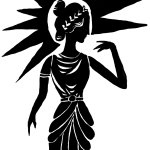
Visual: Mila Jordaan
