
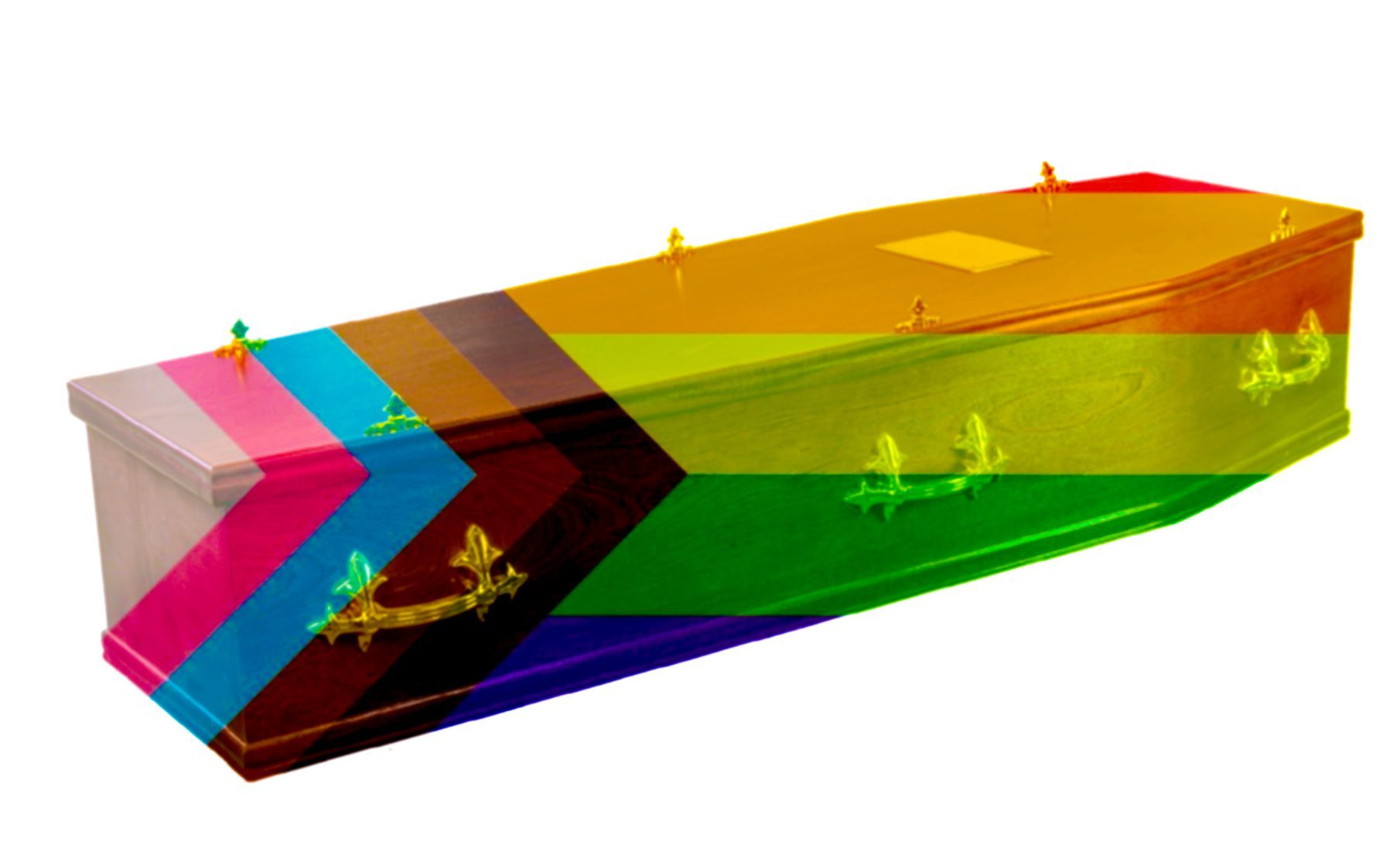
Vampires have always been a little bit gay. This isn’t a hot take, it’s literary history. Sheridan Le Fanu’s Carmilla from 1872 was a sapphic love story written before the word “lesbian” was widely used. Bram Stoker’s Dracula from 1897 was published shortly after the Oscar Wilde trials. The novel reflects a period of intense societal panic regarding “degeneracy” and hidden same-sex desires. Queer writers have long used the vampire as a disguise, a way to explore desires that could not be spoken about openly without risking everything. AMC’s Interview with the Vampire took the subtext and brought it out into the open. The story, however, isn’t just about “gay vampires”. It uses vampirism to explore what it means to be seen as different.
The vampire is a creature that lives in the shadows, hides its true nature, fears being discovered and desperately wants to be invited in. As far as metaphors go, it’s almost too perfect for queerness. Vampires also exist outside of human time. They do not reproduce in conventional ways and create their own families, their own rules and their own ways of living. This is why vampires have often represented people society labels as “other”. However, queerness has been one of the most obvious readings throughout the last three centuries.
AMC’s adaptation makes this connection impossible to miss. Louis du Pointe du Lac is not just a vampire. He is a Black gay man living in 1910s New Orleans. He is already treated as an outsider because of his race and his sexuality before he becomes a monster. He struggles with two things he cannot change: being a vampire and loving Lestat. He tries to hide and control both. He refuses to drink human blood, treating vampirism almost like an addiction he can overcome if he just tries hard enough. At the same time, he keeps his relationship with Lestat hidden because being openly gay was dangerous at the time. His queerness and vampirism become two parts of himself that he feels forced to conceal, leaving him isolated from both his family and the life he once knew.
What makes Louis’ struggle so devastating is that his denial of vampirism and his denial of queerness are mirrors to the same problem. He tries to remain human by rejecting the blood, even though the blood is what sustains him. This becomes especially clear when his refusal to drink blood starts affecting his relationship with Lestat. Without enough blood in his body, Louis has no energy and becomes physically weak. His lack of blood leaves him unable to fully participate in intimacy, turning his struggle with vampirism into a physical reflection of his struggle to accept his sexuality.
Many queer people grow up learning to see their desires as something to manage, hide or cure. Louis takes this feeling and manifests it physically. His body weakens because he refuses to give it what it needs. His shame does not make him noble. It makes him miserable and hurts the people who love him.
On the opposite end of the scale, Lestat de Lioncourt has never pretended to be anything other than what he is. He is theatrical, vain and completely unapologetic. Where Louis sees vampirism as a curse, Lestat sees it as a promotion. Why would anybody want to be human? Humans are boring. Humans die. It is easy for Lestat to be unapologetic though. He is a white man, and a wealthy French aristocrat at that. He has never had to make himself small in the same way Louis has. Lestat’s queerness and vampirism make him different, but his privilege gives him more freedom to be loud and visible.
What Lestat offers Louis is a different way of living. He doesn’t just want to be accepted, he wants to be adored. He doesn’t want tolerance on society’s terms, he wants to rewrite these terms entirely. This becomes even more interesting in the Vampire Lestat release in 2026, where Lestat becomes a public rockstar. By putting himself on stage, the show allows him to turn his difference into something visible and powerful. He is not hiding in the shadows. He’s making himself impossible to ignore.
But even embracing who you are does not make the danger disappear. Vampires still need a community – not just physically, but emotionally as well. This feels familiar to queer audiences. Representation in community can offer recognition and belonging, especially for people who have been made to feel isolated by society. The Stonewall Uprising of 1969 showed how visibility and resistance could become powerful forms of community. Yet visibility alone is not liberation. Louis spent decades hiding and wallowing in misery. Lestat refused to hide and became a target. Neither approach offers an easy answer.
This is what makes these shows so compelling. They do not present queerness as a single experience or vampirism as a simple metaphor for being different. Instead, they show how identity, shame, privilege, desire and survival all intersect.
This Halloween, maybe the bravest thing a vampire can do is come out of the coffin.

Visual: Khanyisa Motsepe
