
What does it actually take to engrave freedom into law? Not the freedom that sounds good in a politician’s speech, but the kind that has to survive the courtroom, public scrutiny and a country still arguing over who counts as human. For Simon Tseko Nkoli, it took everything he had.
After the 1994 democratic elections, South Africa became the first country in the world to write protection from sexual-orientation discrimination directly into its Constitution. Other places had gay rights on the books before then; none had anchored them in founding law. It’s a fact often mentioned in passing, tucked into a Pride Month post or a footnote. But behind that clause was a man who fought two battles at once and refused to be told he could only pick one.
Simon Nkoli was already an anti-apartheid activist when he was arrested in 1984 and charged with treason during the Delmas Trial, alongside 21 other activists. While awaiting trial, he came out as gay to his fellow accused, and it did not go smoothly at first. According to South African History Online, in its profile of Nkoli’s life and activism, some of his co-accused initially struggled with the idea that a liberation movement should also make room for gay rights, unsure whether the two struggles were even related.
Nkoli disagreed, loudly and repeatedly. Speaking at South Africa’s first Pride march in Johannesburg in 1990, he told the crowd: “I am Black, and I am gay. I cannot separate the two parts of me into secondary or primary struggles.” For him, there was no ranking system for oppression. You didn’t get to fight racism today and homophobia some other day. It was all one fight, or it was not a fight for freedom at all.
That conviction ran through everything he built. After his release, Nkoli founded the Gay and Lesbian Organisation of the Witwatersrand, known as GLOW, one of the first Black-led queer organisations in the country. According to The Conversation, in “Simon Nkoli’s fight for queer rights in South Africa is finally being celebrated,“ Nkoli went on to help push the African National Congress toward including sexual orientation in its vision of equality, laying groundwork that would eventually shape the 1996 Constitution’s equality clause.
He also became one of the first openly HIV-positive gay Black men in Africa to speak publicly about his status. Back then, an HIV diagnosis read like a confession as much as a health condition, carrying risks to someone’s job, family and safety, and for a Black gay man it meant another layer of stigma stacked on top of race and sexuality. Silence was safer for most, yet Nkoli chose visibility instead. He died in 1998, at 41, having spent much of his short life absorbing risks so others wouldn’t have to.
Nearly three decades on, it is fair to ask what “enshrined” has actually meant since. Section 9 of the Constitution, the equality clause, makes it unlawful for the state or individuals to discriminate against someone based on sexual orientation. According to research published in the International Journal of Transitional Justice on Oxford Academic, Nkoli’s activism was central to embedding sexual orientation protections in South Africa’s constitutional order, a legal first that legal scholars still study today. But a clause on paper doesn’t guarantee safety practically. Black queer South Africans, particularly in townships and rural areas, still face violence no wording alone can undo.
Nkoli understood that gap better than most. He was not fighting for a law that would let the country congratulate itself and move on, but for a country that would have to keep living up to what it had written down; that is the contrast between his vision and where South Africa still falls short, and why the fight isn’t finished just because his name made a textbook. Continuing it means holding the country to the promise he helped write, and that is the real weight of his legacy.
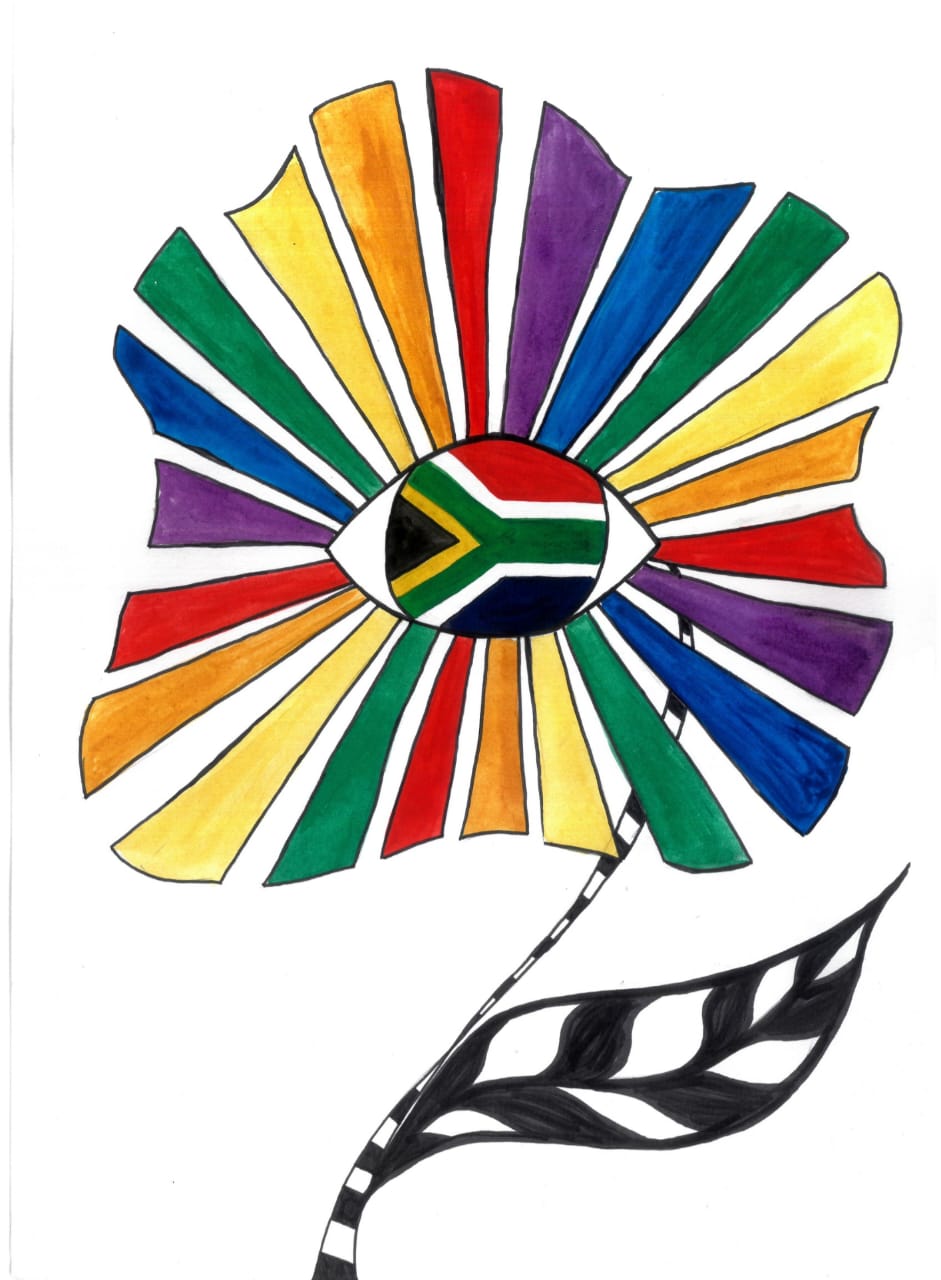
Visual: Mila Jordaan
