
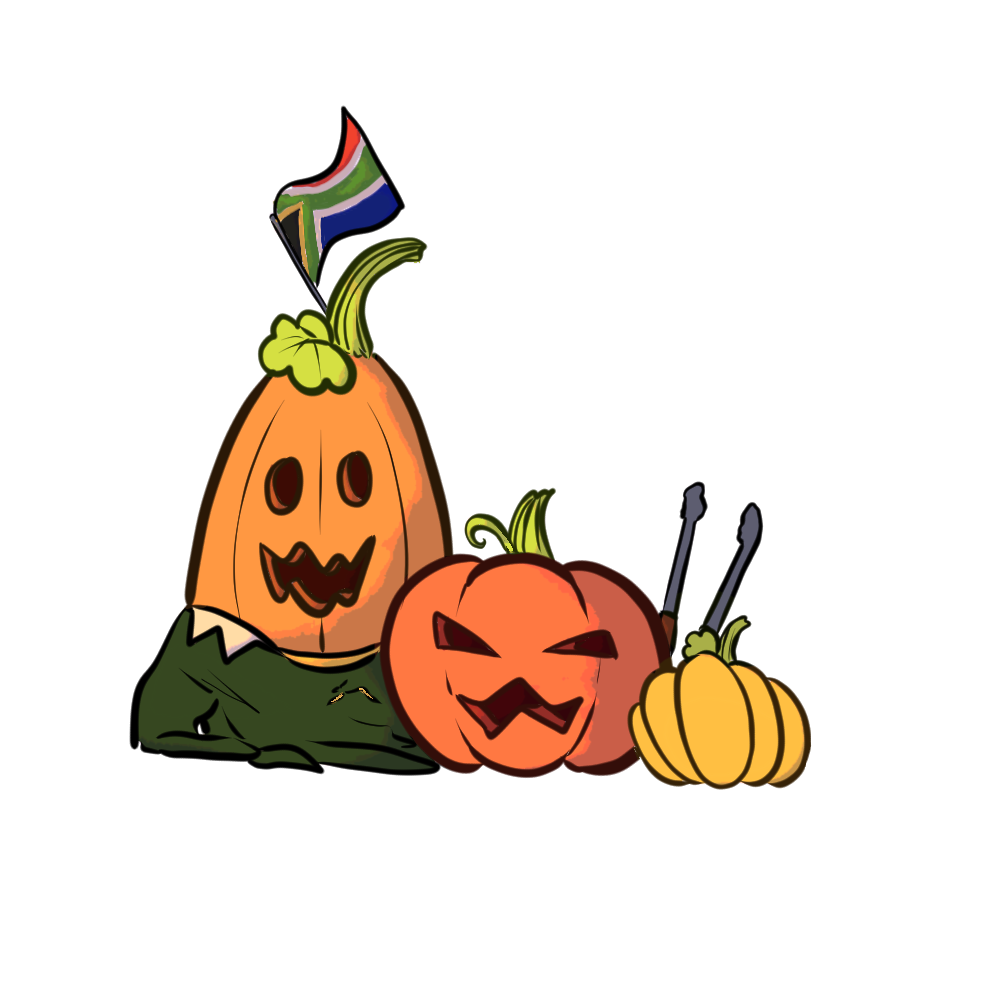
If you asked any South African about Halloween 10 years ago, you would either be met with a disgruntled answer about it being “an American thing” or something “demonic”. Now, many around the country go all-out for the holiday. But how did we get here?
Halloween hails from Central and Western Europe where an ancient Celtic festival, Samhain, was celebrated. The Celts celebrated their new year on the 1st of November. This was to usher in the beginning of a harsh winter – a time that they associated with human death. According to History.com, the Celts were of the belief that “the boundary between the worlds of the living and the dead became blurred” on the new year’s eve. On that night they would celebrate Samhain, which is when the ghosts of the dead returned to the living realm. History.com goes on to detail that Celtic priests would gather around bonfires to burn crops and animals as a sacrifice to their deities. They did this whilst wearing costumes made of animal heads and skins. Further along the timeline, growing Christian influence in the Celtic lands resulted in the celebration of All Soul’s Day on the 2nd of November to honour the dead and replace Samhain with a “church-approved observance.” All Soul’s Day was celebrated with bonfires, costume dress-ups as saints, angels and devils. It is then noted that this day was also called All-Hallowmas and the night before it, All-Hallows Eve – which then became Halloween.
The main reason Halloween became a global pop culture phenomenon mostly boils down to its large hold on American media and society. While being a European invention, Halloween grew in America as a result of European migration to the Americas. And in the 19th century, Halloween began to move into a holiday about community and parties instead of ghosts and witchcraft, with seasonal foods such as pumpkins becoming a holiday focus. This brings us to the rest of the world. The USA’s popular culture has been synonymous with global culture for centuries. Much effort has been put into creating a global space to export American media, technology and economic influence to the rest of the world. Most importantly, many technological tools such as the internet, TV broadcasting and personal computers are mediums for American influence, offering them the ability to control the default channels of media communication throughout the world.
South Africa, as a result, stood no chance in not being influenced by American culture. Despite only operating in South Africa and other sub-Saharan African countries, the satellite and streaming provider, DStv, offers dozens of American and European channels, most of which we grew up on, such as Cartoon Network, Disney Channel or TLC. Thus it is no wonder we become completely immersed in American pop culture. Due to economic constraints, South Africa does not have as established a media industry as the USA, especially for media targeted towards children and teenagers. This is exactly how American culture slithers its way into our everyday lives.
We grew up watching countless Halloween-themed episodes and movies. It is no surprise that we have become connected to the holiday as though it is one of our own. The continued hold that Western culture has on the Global South points to a still lacking local culture of media creation and influence on global broadcasting channels.
But we should not focus on the negatives only, right? Like the children connecting over “67” through the video portals despite being from different countries, having a holiday that many all over the world celebrate shows that we aren’t all that different. We all crave community and reasons to celebrate. In Hatfield alone, thousands of us spook-ify the streets with elaborate costumes, and that is not set to change this year. So, start planning that costume because Halloween falls on a Saturday this year!
Visual: Gabriella le Roux
