
What do you say to your mother when she tells the whole street you are going to change your family’s life and you have not even figured out where the lecture hall is yet? For thousands of South African students, that is not a rhetorical question. It is the first week of first year, and it lands hard. Nobody warns you that being the first in your family to set foot on a university campus makes you a pathmaker – the one who has to find the route before anyone behind you can follow it, with no older sibling’s notes to borrow and no parent who can say, “When I was at varsity…”
Call it what you want – first-generation, “die eerste een”, the ancestors’ wildest dream. But according to an article published by Taylor & Francis, research on African first-generation STEM students at South African universities found five themes recurring: motivation, resilience, toxicity, racism and politics, and Black Tax. Not one theme is “excitement about registration week”. Walking a path nobody in your family has walked before means doing a degree while managing debt you did not choose and campus spaces that were never built with you in mind.
That matters more than it gets credit for. The same research notes that South African higher education still carries the fingerprints of its past, with Black students underrepresented and overextended in fields like science and engineering decades after apartheid formally ended. Walking into a lecture hall as the only one who has walked the path you have walked is not a footnote – it is the whole first semester, a reminder that the path was not cleared in advance.
So what keeps a person walking a path with no footprints to follow? According to The Journal, a 2025 study on first-generation Black students found that friendship and support – not funding or counselling, just people who understand – significantly predicted whether students stayed motivated or not. It sounds too simple, but when your parents cannot explain what a “999” code is, the person in the residence kitchen who gets it becomes the closest thing to home you have. They cannot lighten the load, but they can walk beside you while you carry it.
There is a quieter thread too. An article on Wiley’s Online Library picks up on research on first-generation students globally: lower engagement, delayed graduation, and higher dropout rates than continuing-generation peers. This is not because these students are less capable. Rather, it is the result of the system that was never built to catch them. When you are first on a path, there is no one ahead to warn you where it dips.
And here is what nobody prints on the prospectus: pride and the fear of losing your footing can live in the same body at once. You can be genuinely proud that your name will be on the first degree certificate in your family’s history and still lie awake wondering if you will make it to the end of the path. Both are true, and they can co-exist. Carrying your family’s hopes forward was never going to feel light. It was always going to feel like exactly what it is: a weight worth carrying.
If you are that student right now, staring at a lecture slide that might as well be in another language, googling terms your lecturer assumed everyone knew, you are not failing at something everyone else finds easy. You are laying the first stones of a path your family has never had the chance to walk, without a map, and mostly without anyone noticing the weight you are carrying. That does not make you a fraud – it makes you first. And somewhere behind you, someone is already watching where you step.

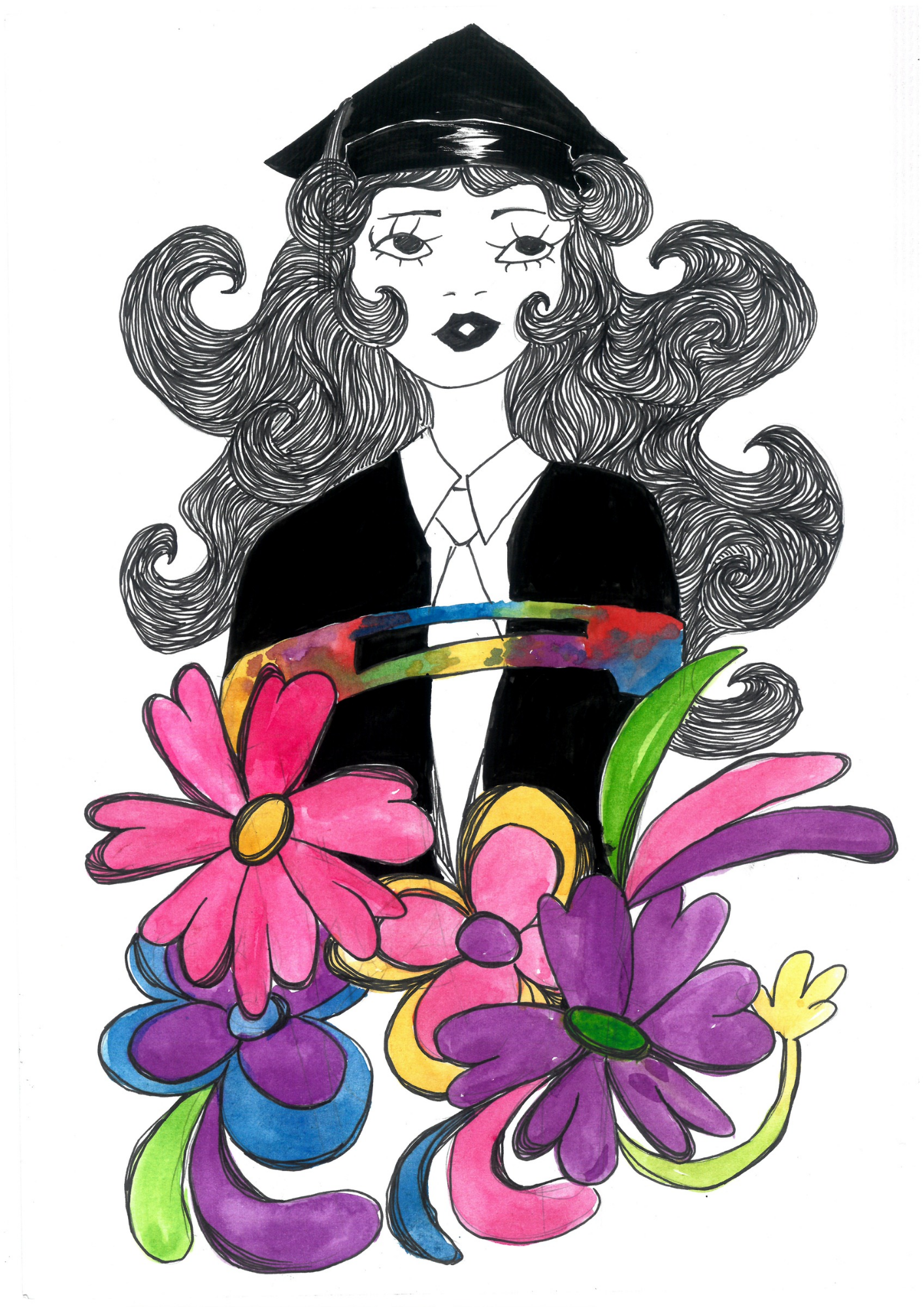
Visual: Mila Jordaan
