
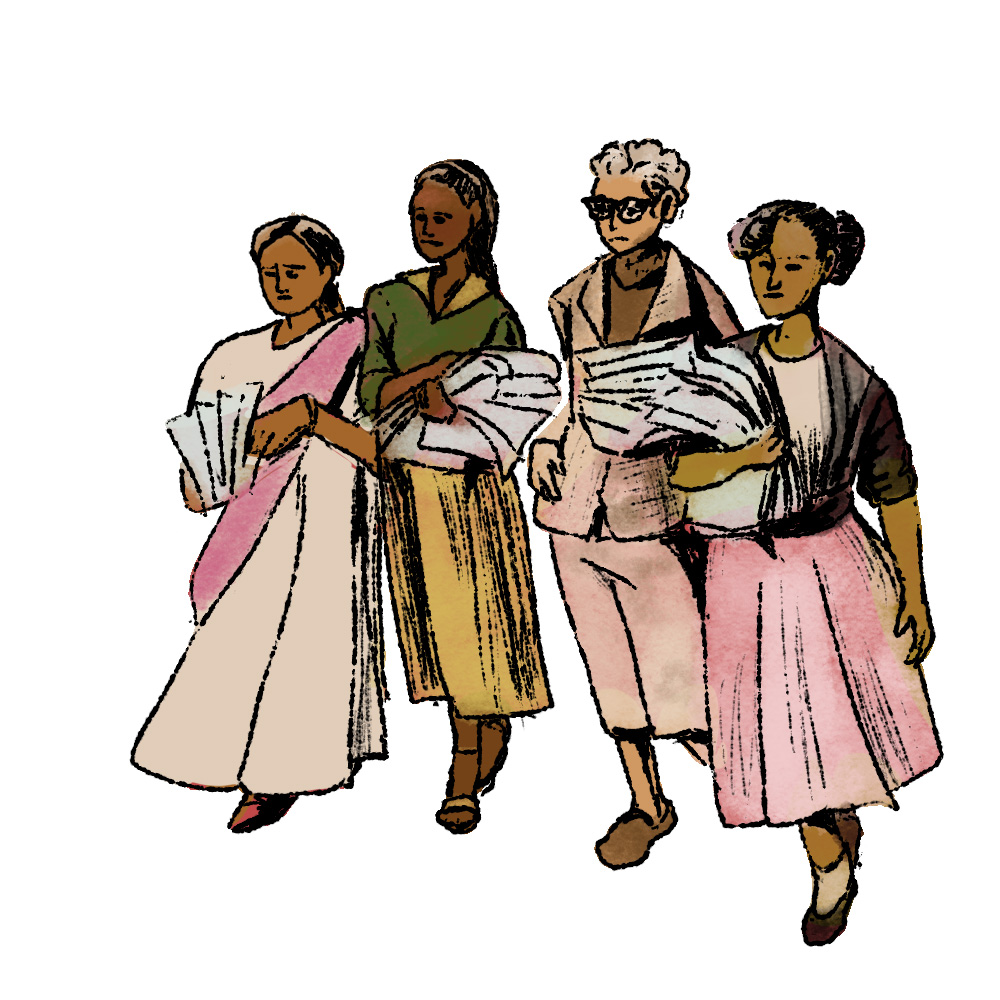
When the South African government declared gender-based violence and femicide (GBVF) a national disaster in November 2025, the announcement carried the weight of a promise. For many women, it signalled that a crisis long dismissed as inevitable had finally been recognised for what it was: an emergency. As Women’s Month arrives, another question lingers beneath the headlines: has anything changed for the women who still share their location to ensure they get home safely?
A recent PDBY Instagram Poll asked the same question to students, and the results told their own story. 91% of respondents said that their day-to-day life as a woman had not changed since the declaration, while only 9% said it had. This result reflects what students describe when they talk about getting home safely.
For university students, the answer is not measured in legislation or policy documents. It is measured in phone calls made before entering an Uber, in live location pins shared with friends, in avoiding empty lecture venues after dark, and in calculating which route home feels the least dangerous. The declaration may have been historic, but the day-to-day fear has remained.
According to the FW de Klerk Foundation in GBV Declared a National Disaster: What Happens Now?, the declaration acknowledged that gender-based violence is not simply a criminal justice issue but a national crisis requiring co-ordinated intervention across government departments. It represented an admission that existing responses had failed to protect women and that extraordinary measures were necessary. Recognition, contrary to popular belief, does not always translate into reassurance.
South Africa continues to face one of the highest rates of violence against women globally. According to Confronting South Africa’s Crisis of Gender-Based Violence published by Human Rights Watch, victims of GBVF continue to encounter systemic failures, including inadequate investigations, limited support services, and significant barriers to justice. The organisation argues that meaningful progress depends not only on stronger legislation but also on consistent implementation, accountability, and survivor-centred support. That disconnect between political commitment and lived reality is arguably most visible among young women.
University campuses are often described as spaces of opportunity, yet they are also places where many students quietly develop routines designed around survival rather than convenience. Walking in groups, avoiding evening classes where possible, texting friends upon arriving home, and remaining constantly alert have become habits so normalised that they are rarely questioned. Safety has become another responsibility women are expected to manage themselves.
Research suggests that vulnerability is shaped by more than gender alone. According to the Human Sciences Research Council in Violence Against Women in South Africa: Intersecting Vulnerabilities, factors such as age, socio-economic inequality, and social exclusion compound women’s exposure to violence. The report argues that GBV cannot be understood in isolation from broader structural inequalities, making it a crisis rooted as deeply in society as it is in criminality. The lived reality of many South African women helps explain why symbolic victories often feel incomplete. Declaring GBVF a National Disaster acknowledged the scale of the problem, but declarations alone cannot restore confidence. They cannot convince a student who is walking from the library after sunset that they are suddenly safe, nor can they erase the instinct to send one final message reading “I am home”.
Women’s Month has always been about more than remembrance. It is also about accountability. Commemorating the women who marched in 1956 means asking difficult questions about the present, including whether enough has changed for the generations now walking university corridors with the same fears their mothers carried.
A national disaster was declared. For many women, the emergency never ended. Until safety becomes something women can assume rather than negotiate every single day, the country’s most important promise remains unfinished.

Visual: Jemma Thomson
