
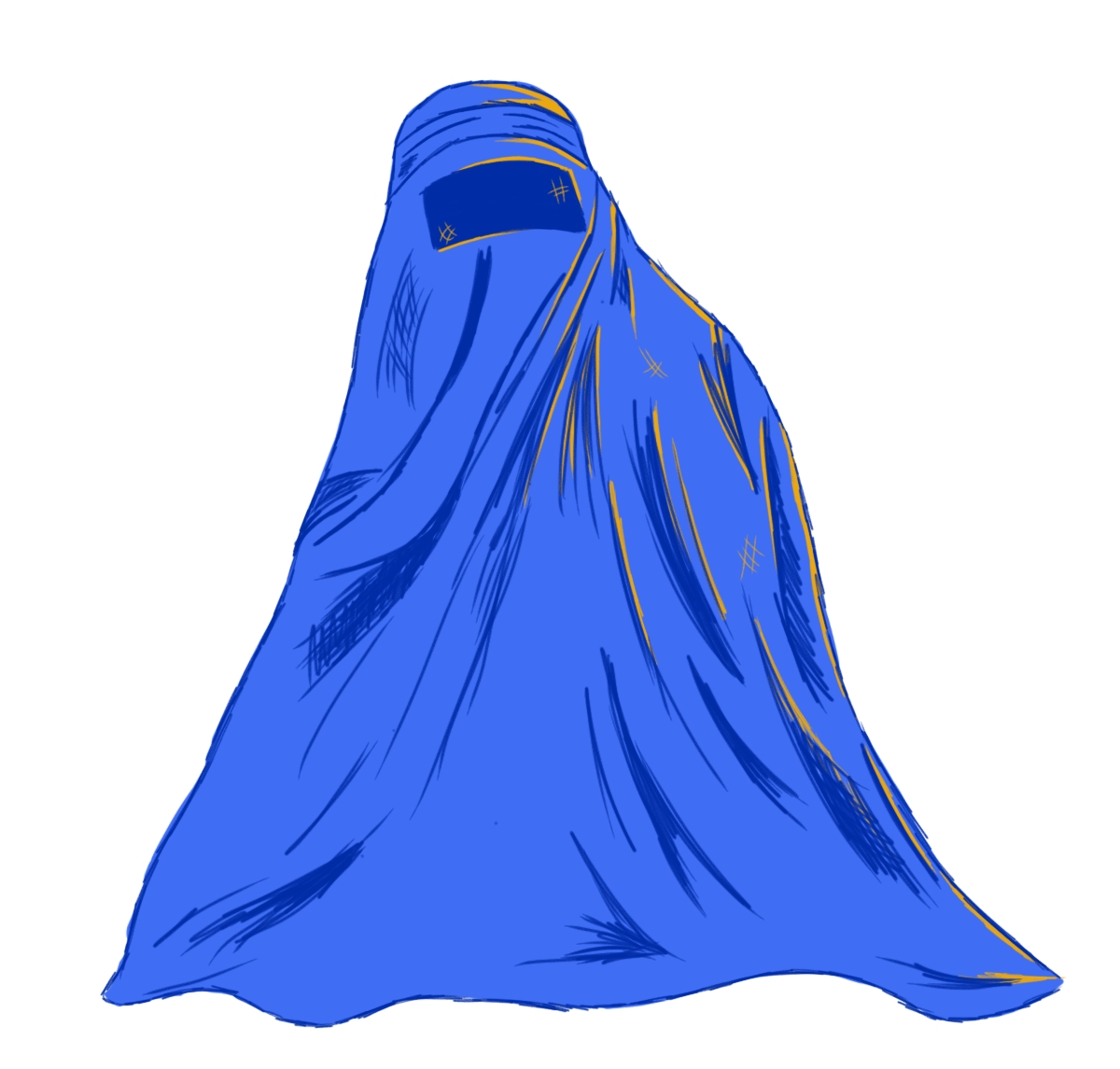
Imagine waking up one morning to discover that your future is no longer yours. Your degree has been cancelled because of your gender. You cannot leave or enter campus without permission from a male relative. Your voice cannot be heard in public. Your dreams are no longer measured by your ambition, but by someone else’s idea of what a woman should be, and your presence is only tolerated if it is almost invisible. For millions of women and girls in Afghanistan, this is not fiction. It is everyday life.
Since the Taliban returned to power in 2021, Afghan women have watched decades of progress disappear through a series of decrees that have stripped away their rights. Girls are banned from secondary and higher education, women have been pushed out of most employment and public life, and restrictions continue to limit their movement, healthcare, and access to justice. UN Women describes Afghanistan as facing the world’s most severe women’s rights crisis, warning that the systematic exclusion of women is becoming dangerously normalised. For university students, it is difficult to imagine being told that your education has ended simply because you were born female. And yet, that reality is lived every day by thousands of Afghan women whose lecture halls have become locked gates and whose graduation ceremonies may never come.
To understand whether students at the University of Pretoria saw this as a distant issue or one worth caring about, PDBY conducted an Instagram poll asking, “In Afghanistan, many women are no longer allowed to attend university. Should this matter to students in South Africa?” An overwhelming 93% of respondents said yes, while only 7% disagreed. The results suggest something powerful: students understand that human rights cannot be viewed through borders alone. When education is denied to one group of women, it becomes a warning to the rest of the world that rights can be taken away just as easily as they were won.
“Women’s rights are human rights. If we only care when injustice happens in our own country, then we have already failed each other. Today’s Afghanistan could become tomorrow’s warning for another nation,” Venus Nare, a final-year Political Science student, said. While it is tempting to see Afghanistan as an isolated tragedy, gender inequality is not confined by borders. It simply wears different faces.
Women in the US are confronting a different kind of regression. The overturning of constitutional abortion protections in 2022 allowed individual states to impose sweeping restrictions on reproductive healthcare. This is a reminder that rights once considered secure can still be rolled back. While American women continue to enjoy many freedoms unavailable to Afghan women, these developments reveal that gender equality is never guaranteed and it must constantly be defended.
Closer to home, South Africa tells another story. In 1956, more than 20 000 women marched to the Union Buildings to protest the Apartheid Pass Laws. They stood together with courage declaring, “You strike a woman, you strike a rock.” Their march became one of the defining moments in South African history and laid the foundation for many of the rights women enjoy today. However, nearly 70 years later, South African women are constitutionally equal, but many are still not safe. Today, South Africa experiences one of the highest rates of gender-based violence and femicide in the world. Every headline about rape, intimate partner violence, or the murder of another woman raises an uncomfortable question: what good are rights on paper if women cannot exercise them safely?
The women of 1956 fought to be recognised as equal citizens. Today’s generation is still fighting for the simple right to live without fear. Another PDBY Instagram poll asked students what Women’s Month means to them. While 38% viewed it as a time for celebrating progress, the majority believed that it is about continuing the fight for rights that are still denied. The poll reflects a generation that refuses to mistake progress for victory. Students recognise that while milestones deserve celebration, they cannot overshadow the realities that millions of women continue to face around the world.
Elsewhere on the African continent, inequality continues to take different forms. In the eastern Democratic Republic of the Congo, conflict has turned sexual violence into a weapon of war, leaving thousands of women and girls traumatised while many survivors struggle to access justice and healthcare. In Nigeria, child marriage, unequal educational opportunities, and gender-based violence continues to limit the potential of millions of girls despite ongoing advocacy and legal reforms. Although important progress has been made in Ghana, women continue to face barriers in political leadership and economic participation. Across many African societies, deeply rooted patriarchal traditions still influence who speaks, who leads, and who is expected to remain silent.
For students, these stories should not simply be international headlines scrolling across a phone screen between lectures. Universities are where future policymakers, lawyers, journalists, teachers, entrepreneurs, and activists are shaped. The conversations students have today will influence the societies they build tomorrow.
The women who marched to the Union Buildings in 1956 did not march only for themselves. Afghan women who continue to seek education are not fighting only for Afghanistan. Survivors of gender-based violence in South Africa are not demanding justice only for themselves. They are all part of the same story. The fight for gender equality did not begin in Afghanistan, South Africa, or the US, and it will not end there either. Every time one woman loses her rights, the world is reminded that progress is never permanent. However, every time another woman refuses to stop fighting, the world is reminded that neither is hope.

Visual: Mpho Makwela
