
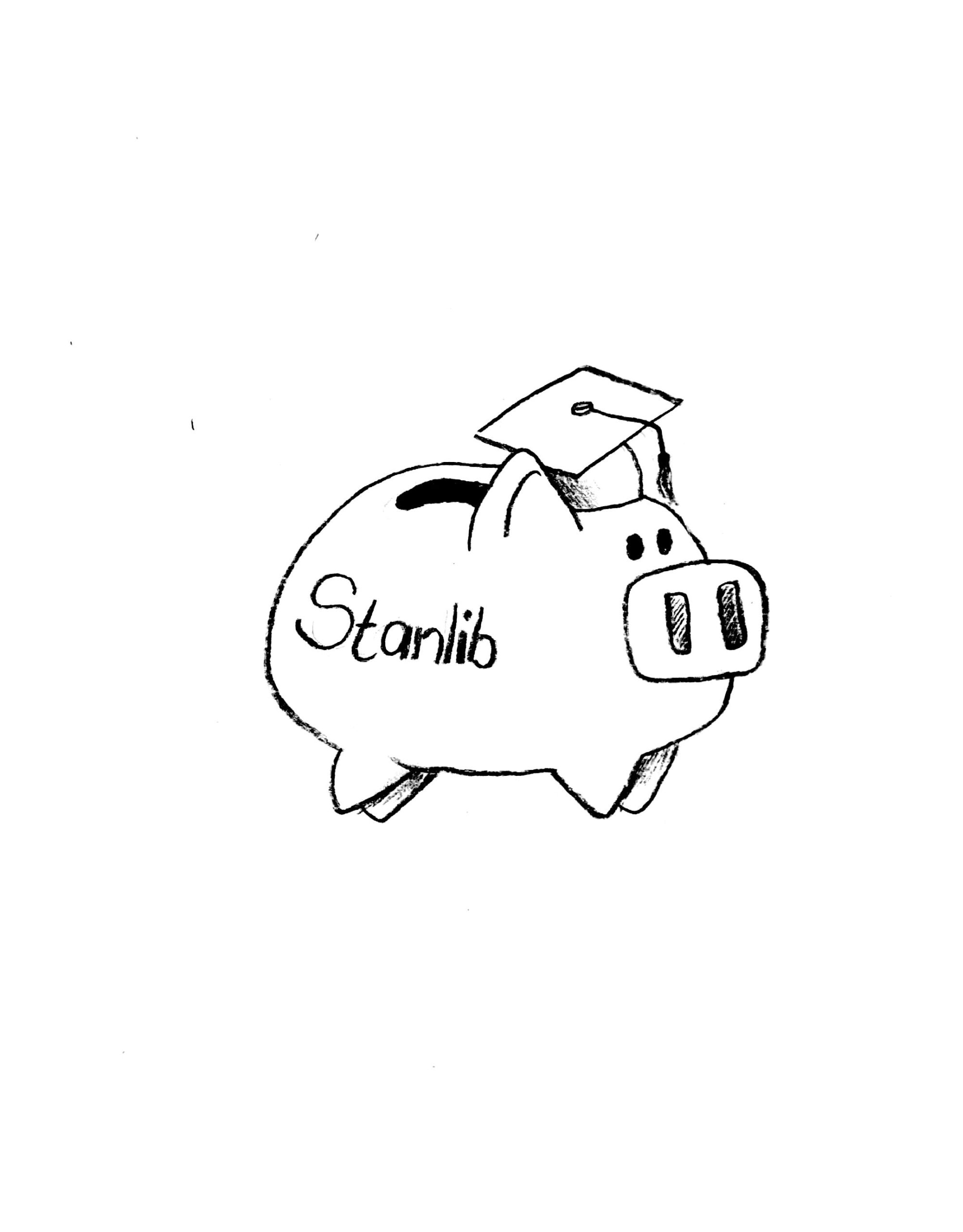
On 23 July, STANLIB Mind My Money partnered with the Association of Black Securities and Investment Professionals (ABSIP) Student Chapter UP, Tuks Fin’est, and the STARS Mentorship Programme to host a financial literacy workshop aimed at equipping students with the knowledge and practical skills needed to make informed financial decisions. The initiative brought together financial professionals and student leaders to address the growing need for financial education among young people, encouraging students to develop healthy financial habits that will benefit them long after graduation.
The workshop challenged students to look beyond simply saving money and instead rethink their overall relationship with money. Through practical examples, Portia Malatji from STANLIB introduced students to key financial concepts such as budgeting, building an emergency fund, understanding debt and credit scores, the power of compound interest, entrepreneurship, and investing. She emphasised that financial freedom is achieved through small, consistent financial decisions rather than a high income, encouraging students to begin building sustainable financial habits while in university.
PDBY spoke to Nakisani Thukutha, the Finance and Investment Officer of ABSIP UP, who shared that the initiative was inspired by a desire to improve financial awareness among students. “The inspiration to host this event came from my passion for spreading financial awareness among young people, equipping them with basic financial knowledge, and empowering them to keep themselves financially informed,” she explained. “This is why we collaborated with STARS Mentorship and Tuks Fin’est because we share the same mission to educate students and continue spreading financial awareness every year.”
Thukutha explained that her own experience with financial education inspired her to create similar opportunities for other students. She shared: “Personally, I have benefited from programmes like these. When I attended the financial education workshop last year, I learnt practical skills that I still apply today, such as using the 50/30/20 budgeting method, setting healthy financial boundaries, and planning my spending. Another habit I have developed is tracking my bank statement every month so that I can see exactly where my money is going and identify areas where I can improve my spending habits. It is programmes like these that continue to inspire me to do better financially and, more importantly, to help others empower themselves through financial education.”
The workshop’s impact was evident in the experiences shared by students who attended the session. PDBY spoke to Relebohile Molebatsi, the Faculty of Humanities’ co-ordinator for the STARS Mentorship Programme, who shared how the workshop strengthened her understanding of money management and reinforced the importance of financial literacy. She explained, “What motivated me to attend the event was the fact that they were talking about how to manage your money. As a student, I know a lot of people who struggle to manage the money they get, so I wanted to hear more [about] how to help people and myself with money management.”
Reflecting on the session, Molebatsi said that learning about how investing can begin even while studying was one of her biggest takeaways. “The most valuable lesson I learned was learning how to budget and that I can start investing my money even though I am a university student. It is not too early to invest small amounts every day because, in the future, it will accumulate to more and it will be worth it.”
PDBY also spoke to Nonhlanhla Mtsweni who said that the workshop addressed concerns she had about balancing her daily expenses while planning for the future. Mtsweni noted that she needed help with setting goals and budgeting. “I was hoping to learn [about] how I could manage my money, considering that I need to buy food, pay [for] transport to practicals, and help at home.”
For Mtsweni, understanding the difference between good debt and bad debt was one of the most practical lessons from the workshop. She added, “The most valuable insight was learning about the difference between good and bad debt. Knowing the difference has just recently helped me. I almost opened two credit accounts in the hope of having a good credit score. This lesson made me realise that what I was about to do was going to get me into bad debt because I don’t have a stable income. I rely on NSFAS money that has to pay for my basic needs and to help at home.”
Both students agreed that initiatives such as these are essential in preparing students to make informed financial decisions. Molebatsi highlighted the value of learning directly from industry professionals. She concluded by saying that she believes finance-oriented workshops are very important because they show students the opportunities that are out there. “Hearing an outside and professional perspective from these organisations and gaining more knowledge from people who work with these types of things every day [is really helpful].”
Similarly, Mtsweni said that collaborations between student organisations and industry partners expose students to practical financial knowledge while encouraging them to prepare for unexpected financial challenges. “Collaborations like these help reach more students and share multiple ways of achieving financial literacy, help students with planning ahead for their future, and having backup savings for unforeseen circumstances such as getting defunded and/or not having a bursary or any kind of financial support to further your studies and start businesses.”
The lessons shared during the workshop have already begun shaping the financial habits of those who attended. Molebatsi said that she has started planning her spending while consistently putting money aside for savings, while Mtsweni intends to apply the recommended 50/30/20 budgeting method in managing her finances. “I have started planning out my money on what to use it for while also saving small amounts every day so that, in the future, they can accumulate to a large amount.” Molebatsi said. “Yes, I would definitely recommend this type of workshop for everyone because it was very informative and helpful for money management.” Mtsweni added, “I will start budgeting using the recommended budget method of 50% needs, 30% wants, and 20% savings. I would recommend [that] other students attend these types of events. It’s important to know how to manage and save money.”
By bringing together industry professionals, student organisations, and students, the collaboration between STANLIB Mind My Money, ABSIP UP, Tuks Fin’est, and the STARS Mentorship Programme demonstrated the value of financial literacy in preparing students for life beyond university. As the cost of living continues to place financial pressure on young individuals, initiatives such as these equip students with the knowledge and confidence to make informed financial decisions, build sustainable financial habits, and invest in a more secure future.
Visual: Khanyisa-Motsepe

Lutricia Phiri