
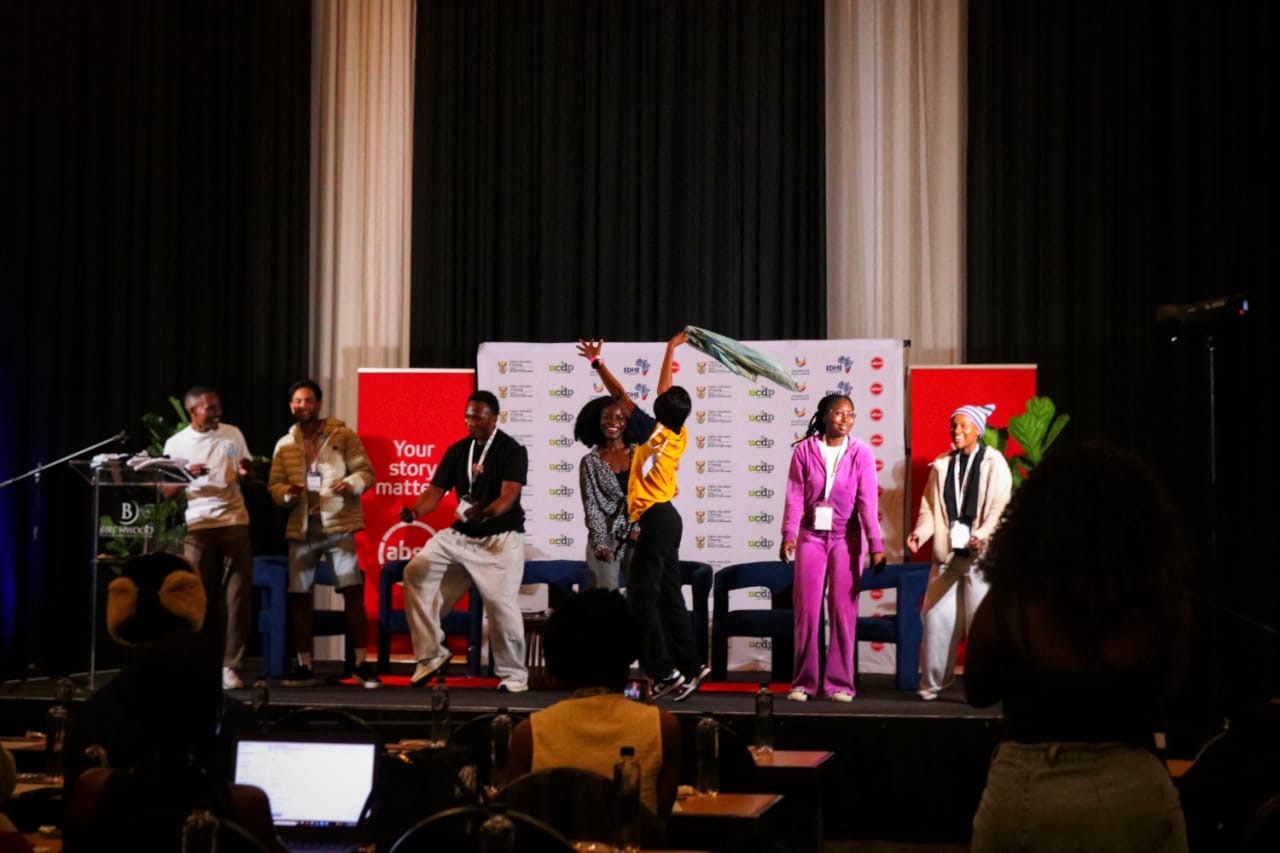
Student entrepreneurs from across South Africa were challenged to look beyond having innovative ideas and focus on the realities of building businesses that can create lasting economic and social impact during the EDHE-ABSA Studentpreneurs Indaba 2026. Held on 10 and 11 September by Universities South Africa through its Entrepreneurship Development in Higher Education (EDHE) programme, the two-day conference brought together student entrepreneurs, academics and industry professionals to showcase businesses, network and learn from established entrepreneurs. This year’s theme, Entrepreneurship in Action: From Vision to Implementation. From Policy to Impact highlighted the need to move beyond conversations about entrepreneurship and towards practical action.
From ideas to innovation
The first day placed innovation and technology at the centre of the programme, with students participating in a 24-hour Virtual FinTech Hackathon. Participants were challenged to explore how technology could help small and medium-sized enterprises access money from their bank invoices in less than 90 days. Teams were required to develop a prototype and present their solutions within the limited timeframe. The University of Pretoria team consisted of Joey Swandhle, Baraka Kileo and Tebogo Phasha. Together, they developed Proofflow, a programme designed to help SMEs access funding before invoices are paid by making sure that the invoice is consistent and having large customers approve said invoices. The hackathon challenged students to develop software under pressure, while also teaching them the importance of teamwork, pitching, marketing and networking.
Learning from established entrepreneurs
The second day shifted towards the conference, pitch festival and exhibitions, giving students the opportunity to engage with established entrepreneurs and showcase their own businesses. Entrepreneur and Chairperson Mr Abed Tau reflected on his journey from studying accounting to building businesses, encouraging students to understand the purpose behind their ventures rather than simply following popular trends. “Your why is your greatest motivation,” he said. Tau, a serial entrepreneur, also reminded students that their academic qualifications do not have to determine the limits of their careers. “Your qualification is not your cage. Live a life of passion,” he stated.
Entrepreneurship with a purpose
For some studentpreneurs, entrepreneurship begins with identifying challenges within their communities.
PDBY spoke to UP student entrepreneur Adelina Belinda Mahuri, a B.Com student specialising in Business Management, whose business seeks to address water scarcity. Mahuri’s business, which began in 2025, is currently in its research and funding stage. Her ideas include using solar systems to turn moist sand into water and pump systems to extract water from soil. Her long-term vision includes developing artificial plants capable of extracting and storing water, while drawing inspiration from plants that naturally retain water. Inspired by water shortages in her community, Mahuri hopes to develop solutions that can benefit communities where access to water remains a challenge. However, she said securing funding remains one of the difficulties facing her venture. Her experience highlights the challenge of balancing social impact with the financial sustainability required to grow a business.
Beyond the glamour
PDBY also spoke to UP student and Information Technology student Tebogo Phasha, who participated in the FinTech Hackathon through TuksNovation. One of the discussions that resonated most with Tebogo was Amohetse Shale’s focus on the less glamorous aspects of entrepreneurship. He reflected that entrepreneurship is often presented through exciting success stories, while much of the work happens behind the scenes. Understanding regulations, conducting research and obtaining the necessary licences are some of the less visible tasks involved in building a business. For Teboho, the biggest lesson from the event was the importance of slowing down when necessary. Drawing on an example shared at the event about the founder of Legends Barber, Tebogo compared entrepreneurship to boxing, where after being knocked down, it can sometimes be wiser to take the eight-count and regain composure rather than immediately getting back up while still disoriented.
Learning from failure
The experiences shared at the Indaba also showed that successful businesses are not built without setbacks.
Lesego Gumede, founder and CEO of Sneaker Cleanic, reflected on his journey from cleaning shoes with a friend in a township carport to expanding the business into multiple locations. His journey included closing one store despite it generating revenue because its location and operating conditions were not sustainable. He also spoke about developing systems that allowed the business to continue operating when he was forced to step away from it. Gumede emphasised patience, persistence, risk-taking and having a clear vision, reminding entrepreneurs that they need to know where they are, where they are going and how they intend to get there.
“If you don’t risk, you don’t win,” he said.
More than a conference
For students, the value of the Indaba extended beyond the formal programme. Student entrepreneurs were able to meet potential collaborators, receive advice from established entrepreneurs, showcase their businesses and learn from people working in sectors different from their own. UP student and founder of GlanSen Graduation Wear, Tetelo Glan Senyolo, highlighted the networking opportunities and advice he received from successful entrepreneurs. His business was created after identifying the difficulty students experience when trying to find affordable graduation regalia. He hopes to expand the business to other universities, with connections made through the Indaba helping him work towards this goal.
Showcasing student businesses
The previous day’s programme also included giveaways, adding an element of engagement and excitement for participating students. Among the businesses represented at the Indaba were Mishies Company, Empowering Township Economics, Cyber Geek, Ubuntu Hackers and Increase from the University of Zululand, alongside student entrepreneurs from institutions including the University of Venda. The exhibitions provided studentpreneurs with an opportunity to place their businesses directly in front of fellow entrepreneurs, academics and potential supporters. For many, this created a space not only to showcase what they had built, but also to connect with others who could contribute to the growth of their ventures.
From vision to implementation
Across both days, one message continued to emerge: entrepreneurship is about more than having an idea. It is about being willing to test that idea, learn from failure, understand the realities of the market, seek support and continue building even when progress is slower than expected. For studentpreneurs, the difficult parts of the journey should not necessarily be viewed as reasons to stop. They can become opportunities to learn, refine an idea and build something stronger. The EDHE-ABSA Studentpreneurs Indaba ultimately reminded students that they do not have to wait until graduation to begin creating solutions. Universities can be spaces where ideas are tested, businesses are developed and meaningful connections are formed. For the student with an idea sitting in a notebook, the message is simple: start where you are, learn as you go and do not be afraid to take the time needed to build something of value. The next business, solution or innovation that changes a community could begin with you.

Visual: Keira Thaoge

Lutricia Phiri