
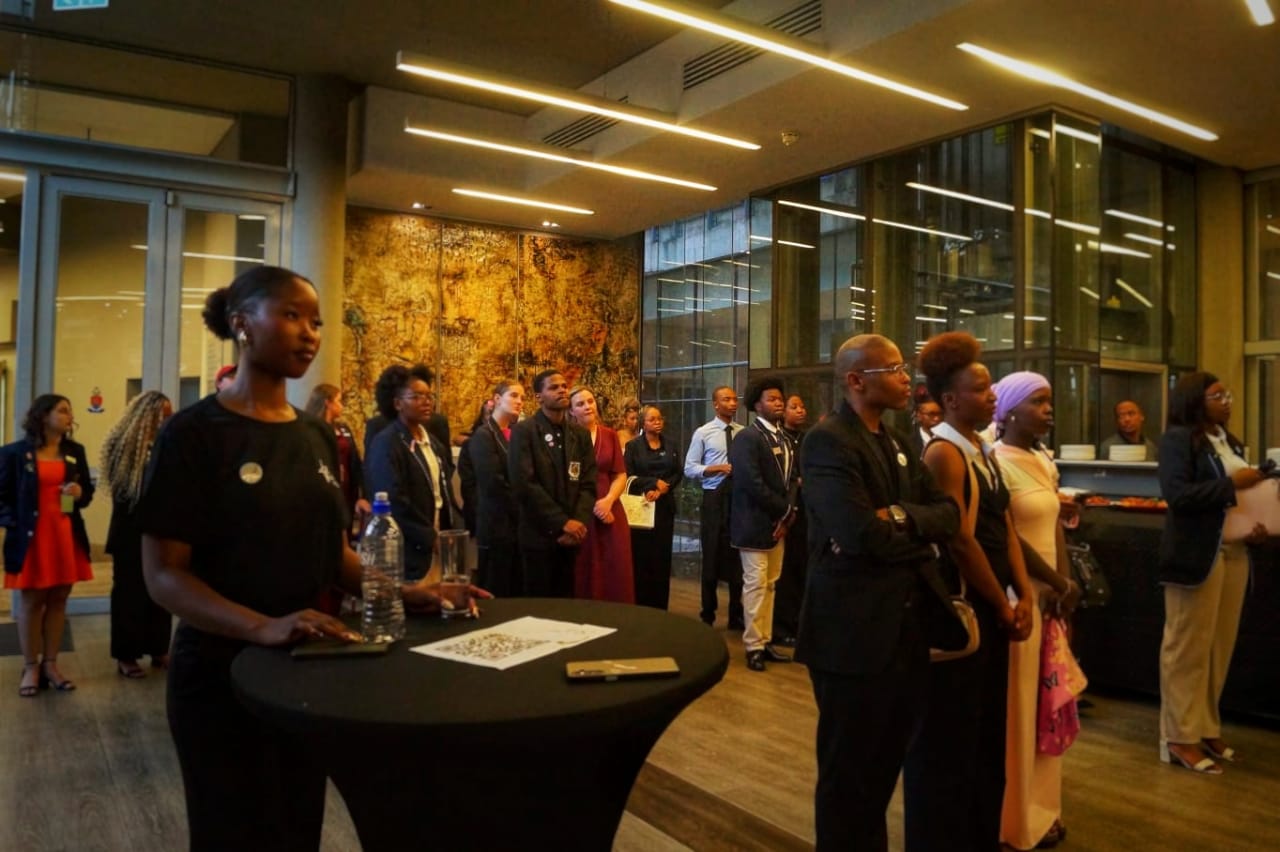
Held on 10 September 2026 at the University of Pretoria’s Aula Hall, the STARS Mentorship Programme hosted its annual Awards Ceremony, bringing together mentors, student leaders, programme representatives and members of the university community to celebrate dedication, growth and excellence within the mentorship programme. The ceremony recognised mentors across the university’s faculties for their commitment to supporting students throughout their academic journeys. The evening also marked a transition in leadership as the outgoing STARS Executive Committee handed over to the incoming 2026/27 Executive Committee.
A Celebration of Mentorship
The evening opened with a welcoming address by Lesedi Ramokoka, followed by opening remarks from Veronica Israel. A saxophone performance by student saxophone player Tendai further elevated the atmosphere, receiving a standing ovation from attendees. The programme then moved into the recognition of mentors across the faculties of Education, Natural and Agricultural Sciences, Health Sciences, Theology and Religion, Humanities, Economic and Management Sciences, Engineering, Built Environment and Information Technology and Law.
When asked about the significance of the awards, Israel noted that the ceremony provided an opportunity to recognise the dedication, growth and achievements of mentors throughout the year. “The annual awards ceremony is an opportunity to celebrate the dedication, growth and achievements of our mentors throughout the year. It recognises the effort, commitment and positive influence of mentors who have guided and supported first-year mentees throughout their transition into university life,” said Israel. She added that standout mentors demonstrated “exceptional commitment, reliability and genuine care for their mentees,” consistently making themselves available to provide guidance, encouragement and support.
Recognising Commitment and Growth
Beyond academic assistance, mentorship provides students with a space to build confidence, navigate challenges and develop meaningful relationships. According to Israel, STARS has created a platform where students can learn from one another, share experiences and navigate university life more effectively.
PDBY spoke to Education mentor Lebogile Tiyiselani, who said being recognised for her contribution was meaningful because mentoring was something she enjoyed. “Honestly, it means a lot to me. Being a mentor was something I genuinely enjoyed and knowing that my efforts were noticed makes me feel really appreciated,” she said. For Tiyiselani, mentorship also reshaped her understanding of leadership. “Sometimes leadership is simply being there for someone, listening to them and helping them find their own way,” she said. She encouraged future mentors to remain approachable and willing to listen. “My biggest advice would be to be yourself, be approachable and, most importantly, listen. You do not always have to have the perfect answer. Sometimes just being there for someone and letting them know that they are not alone can make a big difference,” she said.
Passing the Baton
The awards ceremony also represented a change in leadership as the outgoing Executive Committee handed over Stars blazers to incoming members. The incoming committee also presented the outgoing members with certificates and chocolates in recognition of their contributions.
Outgoing EBIT Faculty Coordinator Cynthia Mmathapelo Mashaba reflected on the lessons she gained from her term, particularly around planning, collaboration and leadership. “Being a Faculty
Co-ordinator taught me that good events do not run on luck; they run on planning. Every event put together, from proposal to budgets and venue bookings to execution, shows how much intention it takes to create something mentors and mentees walk away valuing,” she stated. Mashaba identified FUN-Roller, a cross-faculty event organised by six faculty co-ordinators, as one of her memorable experiences. The event also became an opportunity to introduce new students to STARS when mentors and mentees brought friends along. Reflecting on leadership, Mashaba said it was less about being at the forefront and more about creating an environment where others could thrive. “Leadership on the EC taught me that it is not really about being the one out front but more about creating the conditions for other people to have a good experience,” she said.
A New Chapter for STARS
As the new Executive Committee prepares to lead the programme forward, incoming Theology and Religion Executive Co-ordinator Nonceba Zwane said the role presents an opportunity to challenge herself and give back to a programme that had a meaningful impact on her first-year experience. “I like challenging myself and doing things that are outside my comfort zone, because I believe there is no growth in being comfortable,” she said. Zwane hopes to strengthen her leadership confidence, critical thinking and conflict-resolution skills while engaging with different student bodies and faculties. Speaking on the wider purpose of mentorship, she said STARS demonstrates that university should be about more than obtaining a qualification. “For me, such a programme means that it cares more about the well-being of students, mainly the first years. It is not only about them coming to the institution to get their degrees/qualifications, but it goes beyond that.”
Celebrating Faculty Excellence
One of the evening’s notable recognitions was the announcement of the Faculty of Natural and Agricultural Sciences (NAS) as the STARS Mentorship Faculty of the Year 2026. PDBY spoke to outgoing NAS Faculty Co-ordinator Christopher Zulu about the significance of the achievement and what contributed to the faculty’s success. “Being named Faculty of the Year is an incredibly meaningful achievement for the Faculty of Natural and Agricultural Sciences. For me, it represents the collective effort, commitment and consistency of everyone who contributed to mentorship within the faculty,” he stated. Zulu attributed the faculty’s strong engagement to its ability to respond to the needs of mentors and mentees while building meaningful collaborations. Partnerships with PULSE, NATHouse and SRC expanded support and opportunities for students, while collaborations with external partners such as Liberty introduced financial, professional and developmental opportunities. “Ultimately, I think it was the combination of strong internal participation, intentional collaboration and genuinely listening to what our mentors and mentees needed that contributed to the faculty’s success.” Looking ahead, Zulu hopes the award will become a foundation for continued growth. “I hope this achievement becomes a foundation rather than a finishing point. Going forward, I would like to see mentorship become even more inclusive, structured and sustainable within the faculty,” he said.
Celebrating a Legacy of Mentorship
The evening concluded with the announcement of the 2026/27 STARS Executive Committee, entertainment by Neri, special awards and closing proceedings. While the ceremony celebrated individual achievements, it also highlighted the relationships, leadership and sense of belonging that underpin mentorship. From recognising individual mentors to celebrating NAS as Faculty of the Year, the evening demonstrated that meaningful mentorship is built through consistency, collaboration and a willingness to support others. The Stars Mentorship Awards were not merely a thanksgiving to the mentors who have dedicated their time and efforts to the programme. They marked a continuous celebration of the people who keep the University of Pretoria’s first-year students going, supporting them through the challenges of university life and reminding them that they do not have to navigate the journey alone.

Image: Lutricia Phiri
