
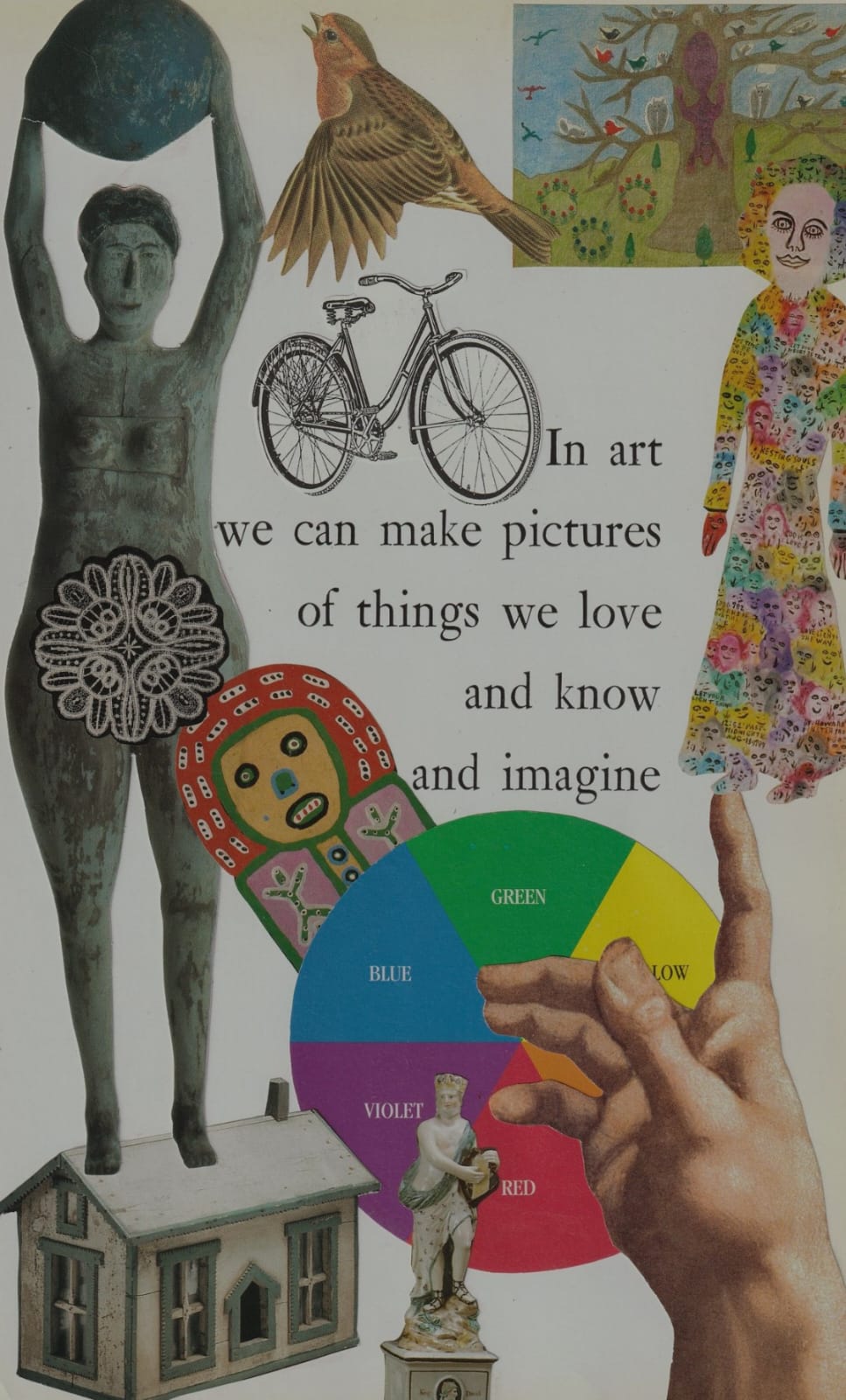
Everything, no matter how different, is essentially connected and part of one another. This is what the art of collage aims to teach. Collages are created by combining various materials such as newspapers, magazines, letters, photographs, fabrics, and even human hair to create a singular layout of artwork. This art form is believed to have begun around 200 BCE, following the invention of paper. Chigiri-e is one of the earliest forms of collage, and it was a method used by Japanese literary artists. They would glue pieces of coloured paper together to decorate their calligraphy so that it appears as a watercolour painting. However, it was only in the 20th century that there was a dramatic rise in the use of this art form. Artists during the Dada and Surrealist Movements were using collage as a response to the ongoing political issues at that time, such as capitalism and critiquing the war.
In South Africa, collages have been created to portray the diverse culture and heritage of the country as well as to communicate socio-political issues. Cities such as Johannesburg are filled with walls that have been decorated with street art collage from artists layering paper, textiles, posters, and photographs onto them. These art pieces usually reflect the narratives of their surrounding communities.
Some notable names in the South African collage scene include Sam Nhlengethwa, Tsholo Motong, and Willie Bester who use the art of collage to depict the past and present lives of South Africans. Nhlengethwa’s work portrays the vibrant culture of Johannesburg, with inspiration from the city’s jazz and fashion scene, its urban street life, and its mining influence. His work aims to represent those that are usually overlooked by society. Motong is a South African fabric collage artist whose works are an ode to African women, especially having grown up under the influence of his grandmother – the woman who inspired him to use fabrics and colours. Tsholo’s artwork consists of combining traditional African fabrics such as Shweshwe (Lesotho and South Africa), Kalanga (Zimbabwe), Kente (Ghana), and Bògòlanfini (Mali) together to create one mosaic that combines different cultures in one story. The cultural identities tied to each fabric are glued together in unity to represent the interconnectedness of all people. Bester uses a technique of combining scrap materials, such as newspaper clippings and bones, to create powerful collages that confront the injustices of apartheid that have bred social injustices in present day South Africa. He also incorporates symbols such as the swastika in his work to represent the ills of society.
Collaging can be complex, but it is one of the most creative outlets you can use to express your views and ideals. Whether it is to portray the life and the people around you or the life that you dream of, collage can be anything you want it to be.
