
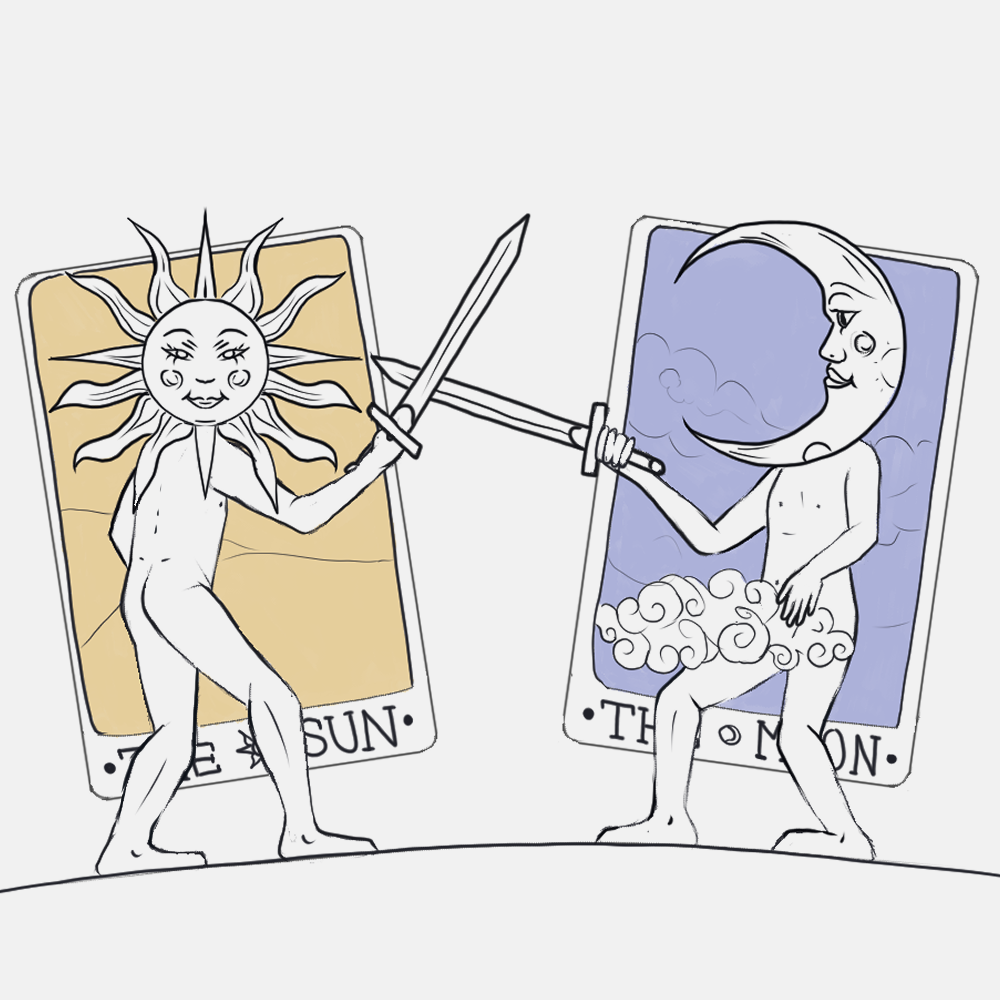
It is presumed that most people know what tarot is. We have all scrolled on TikTok and come across a “this tarot reading was meant to find you” video, but have you ever heard of cartomancy? Card reading for divination is believed to have begun around the 14th century and has come to be known as cartomancy. This is the practice of conducting divine readings using cards, literally any cards, as opposed to tarot which requires a specific deck. So, why is there even a distinction between tarot and cartomancy to begin with? Let us dive right into it!
The difference between the two is not that vast. Both practices include the use of cards, but the distinction depends on what type of cards you use. Tarot cards are a deck of 78 cards split into what is known as the Major and Minor Arcana, with the former displaying figures such as The Hierophant, The Fool, and The Tower among many, and the latter displaying symbols such as pentacles and swords. On the other hand, cartomancy uses regular playing cards such as the standard 52-card deck and the Lenormand deck, which is more like a combination of tarot and playing cards. Cartomancy goes as far as even using UNO cards!
In comparison to tarot, playing cards are used for more definite and specific questions and answers, while tarot is for more expandable interpretations that offer new perspectives as a reading progresses. Think of it this way: tarot is like the full movie of a symbolic journey with the archetypes as the actors, the imagery as the scenery and setting of the story, and the suits and symbols as the dialogue. The cards tell a constantly unfolding narrative. Cartomancy is more like the movie’s storyboard, leaving an individual to link every frame and outline for themself.
Essentially, cartomancy refers to all divine telling done with cards, and although tarot may be cartomancy, not all cartomancy is tarot. However different they may be, why not have the best of both worlds?
