
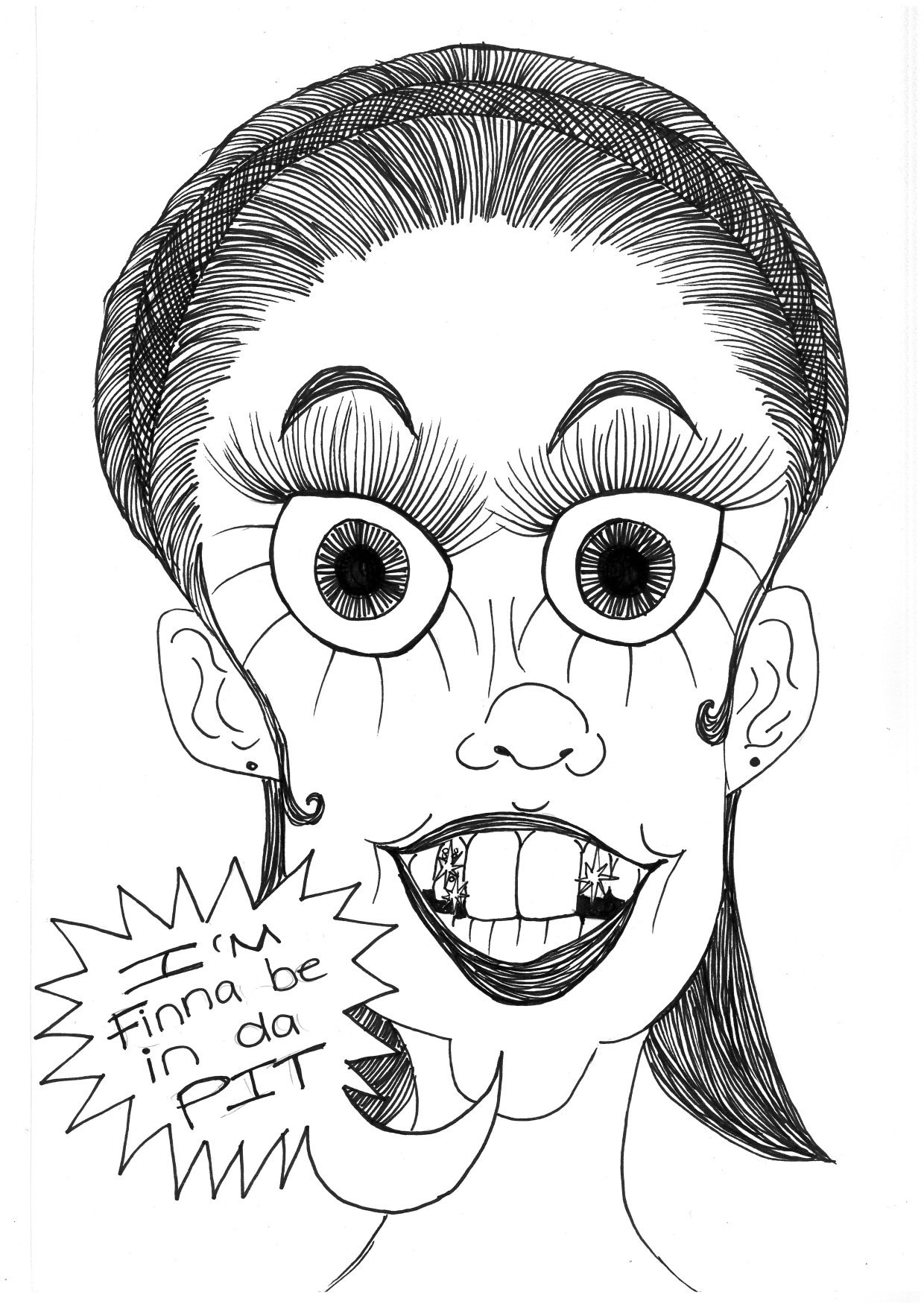
Are you “finna be in the pit” or a “sis” who is “dead as a chile”? While some of this may sound unfamiliar to PDBY’s older readers, a lot of students have heard these terms. Most would place them under the category of “TikTok language”, but what if I told you that they are a part of a variety of English known as AAVE.
African American Vernacular English (AAVE) is a particular variety of English mainly spoken by working class Black Americans. The origins of AAVE are controversial. Some believe it is a result of contact between West Africans and speakers of vernacular English on plantations during the slave trade. Others argue that its origins come from varieties of English spoken in the good ol’ Southern USA. Without getting too bogged down by the finer details, what is clear is that AAVE has a deep, rich history. It is made up of its own syntax, language, grammar, and pronunciation.
A study conducted by Christian Ilbury and Rianna Walcott argues that specific words are consistently lifted from AAVE and reimagined as “TikTok language” or “Gen Z language”. Often, these terms will end up with an altered meaning. “Unc” becomes uncool and “gyatt” becomes synonymous with someone’s posterior. Some other examples of misbranded TikTok language include terms like “finna”, “bussin”, and “chile”. You may have seen some of these in SNL’s infamous “Gen Z Hospital” skit, with AAVE sprinkled into dialogue delivered in a way that makes you feel a discomfort you would feel when your dad says “lit”. You may even see videos where celebrities speak in what they call “Gen Z Slang” while actually using aspects of AAVE. One thing missing from most of these videos is the credit that AAVE rightfully deserves.
While “AAVE fails” and “Blaccent imitations” may seem lighthearted and comedic to poke fun at, there can be some troubling implications. Geneva Smitherman argues that when non-Black people appropriate Black American English, they often do so to gain social benefits without paying any dues to a language born out of struggle. People will use AAVE to gain social cultural capital. Think of the “rillist” Iggy Azalea whose accent suddenly changes to Australian once she is out of the recording booth. Maeve Eberhardt and Kara Freeman theorise that she does this to gain higher viewership and commercial success, because Azalea is never “rill” about the struggles of the Black communities whose accents she imitates.
The phenomenon of reducing AAVE to “online slang” dilutes the language, limiting words born out of a specific cultural experience to gimmicks made up by silly Gen Z kids on TikTok that can be the subject of skits. You can debate whether @taralynn really is “finna be in the pit”, but you must acknowledge that some of your favourite “TikTok” terms originate from a table that many of you are not invited to.

Visual: Mila Jordaan
