
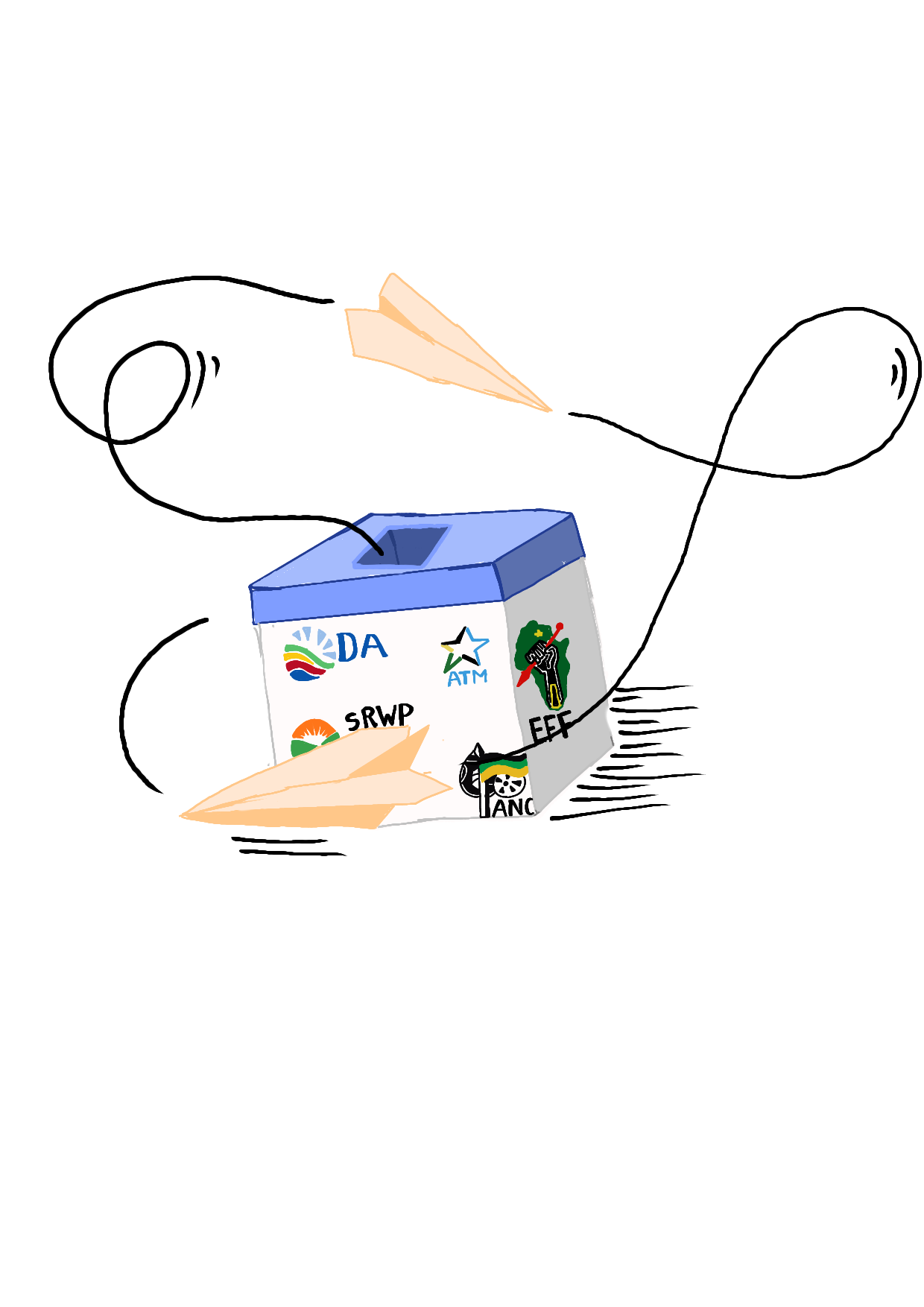
Democracy is granted by the right to vote, but it is only sustained by the continued participation of a country’s people in the voting process. As South Africa approaches its next municipal election on 4 November, the role of young voters in deciding who runs our local government becomes essential, for we are the generation who shall inherit the country along with all its problems one day. Progress does not begin once we step into positions of political power. It starts with an educated youth and the right to vote. Thus, voting is not just a right, it is a moral duty.
General elections for all the municipalities in South Africa are held every five years. All South African citizens that are 18 years or older are eligible to vote. A municipal election determines who represents the residents in their local municipal councils. Through budget and resource allocation, these municipal councils are responsible for the daily service delivery that affects the community, such as, water and sanitation, refuse removal, road maintenance, and electricity distribution. The municipal council represents their municipality and highlights concerns on national policies that affect their local communities.
Polling data collected by the Independent Electoral Commission (IEC) has observed a concerning increase in the “No Vote party” from the 2016 to 2021 local government elections. In an analysis of polling data done by GroundUp, it was surveyed that in the 2016 local government elections, approximately 41% of the population eligible to vote actually turned up on voting day. In the 2021 local government elections, this number was even lower, sitting at a mere approximate 30% . The youth (aged 30 years and below) in South Africa has the highest no vote percentages across the eligible voting population.
It appears that South Africa is facing a widespread youth disengagement from voting entirely. When asked about the importance of voting, UP’s students appeared to have conflicting responses. “Voting is the direct way of having a say in your future,” Lilitha Klaas said. Another student, Phumelela Masinga, felt differently, stating, “It doesn’t mean anything, because one’s opinions are over-looked.” Koketso Malatji expressed that she understands that those before us fought for the right to vote but she ultimately doesn’t feel like her participation matters. When students were asked whether they think their vote has the ability to change local policies in upcoming local elections, the responses varied again. Milly De Beer commented, “Local officials deal with matters that affect our day-to-day lives and voting means that I have a say in what happens in political activities that affect me.” Masinga is of the belief that political systems ensure that the average person’s voice is not heard and that the influence that voting has on policies “depends on if you live in an area where there are a lot of voters for a specific party.”
The political views of some of our students provide some insight into why South Africa is seeing a migration away from voting in young people. Is it because our youth does not fully understand the role and importance of their vote? Or is it because the political parties that they vote for overpromise and underdeliver, causing young voters to lose faith in their elected leaders? Either way, it is apparent that there is fault on both sides. Political parties fall short on their promises, but voters also fail to fully understand the meaning of their vote and its importance. This also begs the question as to whether the education of our youth fully equips them to vote.
Ignorance is in fact not bliss; it is a danger to all. But who should that responsibility fall to? Should voters take political education upon themselves, or is it up to the state? It is a vicious cycle that can only end when all parties come to the table and create a symbiotic relationship. Otherwise, the system is doomed to fail.

Visual: Lunathi

Cassandra Laroque