
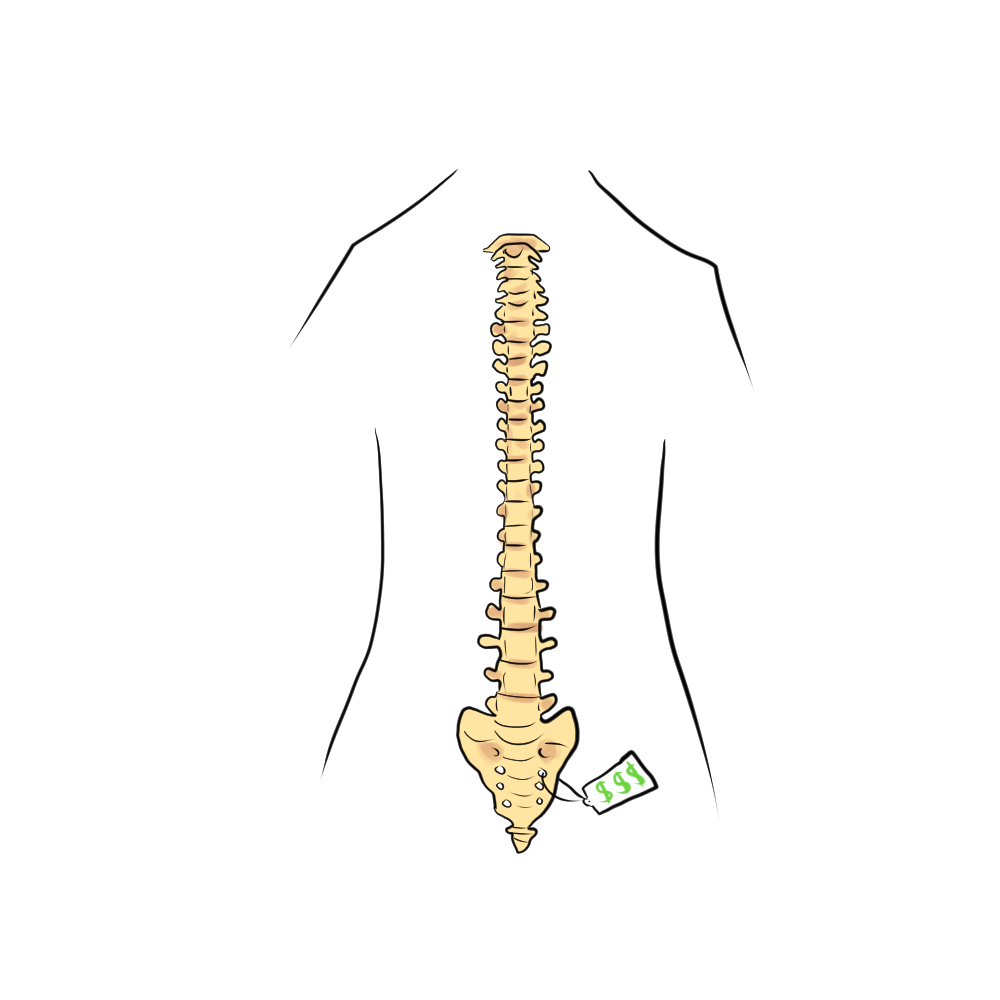
“Nothing will ruin your twenties more than thinking you should have your life together already.”
We have all been there. You are sitting with a friend, holding their hand while they cry over a failed test or a boyfriend who forgot their anniversary for the third time. You offer what you think is perfect advice. You are empathetic, calm, and supportive. But beneath that, there is a quiet, subconscious inkling, a smug little voice whispering, “This could never be me.” Shielded by vanity, you feel above the bullet. Unfortunately… you are not.
In the 10th century BC, King Solomon built the First Temple of Jerusalem. Gifted by God, he was famously the wisest man to ever live. That is, until he married his 700th wife, disobeyed his own laws, and watched his kingdom crumble into ruin.
Fast forward to the last decade, and the field of psychology has made Solomon’s downfall their primary focus. Coined in 2014 by Igor Grossmann, “The Solomon Paradox” describes the psychological tendency to provide wiser, more objective advice to others than to oneself. In experimental studies, people consistently reason more clearly when thinking about someone else’s problems than their own. Like Solomon, we become the “wisest of fools”, able to steer others through a storm, but useless when navigating our own shipwrecks.
The culprit is perspective. When an issue involves you, you lose the luxury of seeing it from the outside. Conflict suddenly seems black and white until you are the one bleeding. Sticking to your guns is not always easy. So I say: forget the Julia Roberts trope of self-discovery and the soul-searching trek. Between lectures, sleep deprivation, and the chaos of daily life, who actually has time for a pilgrimage?
Instead, I propose a new approach. Finding yourself is not about adding more experiences; it is a brutal, messy process of elimination. To truly know who you are, you first have to figure out who you are not. That small voice whispering, “This could never be me”? You need to silence it. Because the beauty, and the tragedy, of life is that eventually, it will be you. You will lose your way, say the wrong thing, or even betray a friend. And that is not failure – it is data.
But mistakes are not permission to coast. If you betray a friend, feel guilty. If you say the wrong thing, feel the distress. It is essential to sit in the discomfort of your errors so you can recognise their scent in the future. Feeling the consequences is not a detour; it is the map. You have to cross off the wrong crowds, the toxic habits, and the reflexive “yeses” that leave you hollow. But if the Solomon Paradox proves we cannot always trust our logic, what can we trust?
Our gut. According to The Guardian, intuition is not mystical – it is a sophisticated biological system. Your brain constantly updates patterns from life experiences, making split-second judgments before your conscious mind can even speak. That sinking feeling at a party, that unease in a friendship? That is your internal compass telling you, “Move on.” Psychologists studying Behavioural Psychology have long shown that behaviour is shaped by consequences, especially the ones you actually feel. Regret, guilt, discomfort… These are not detours. They are feedback mechanisms. They mark patterns. They teach your brain what to avoid next time.
Think of your twenties as a laboratory. Be the scientist of your own life, and here is how:
- Dabble in the Chaos: Go ahead, make the mistake. Be “naughty” enough to actually learn what a bad decision feels like so your gut recognises the feeling next time.
- The Exit Strategy: Use the word “no”. If the Solomon Paradox proves we are bad at logic, lean on your physiology. If your gut says a person or a habit is eroding your self-worth, believe it the first time.
- Leverage Your Circle: Since you can not see your own red flags, it is vital you have a circle – or even just one friend – who will tell you when you are making blunders. You need someone who is not blinded by your perspective.
In the end, you must do the wrong things and make the wrong choices to find the right ones. You must feel the consequence, learn to be better, and make choices that actually serve you. Above all, you must “do”. Get out there and experience. These are your twenties – it would be a damn shame if you had figured it out already.
Visual: Gabriella le Roux
