
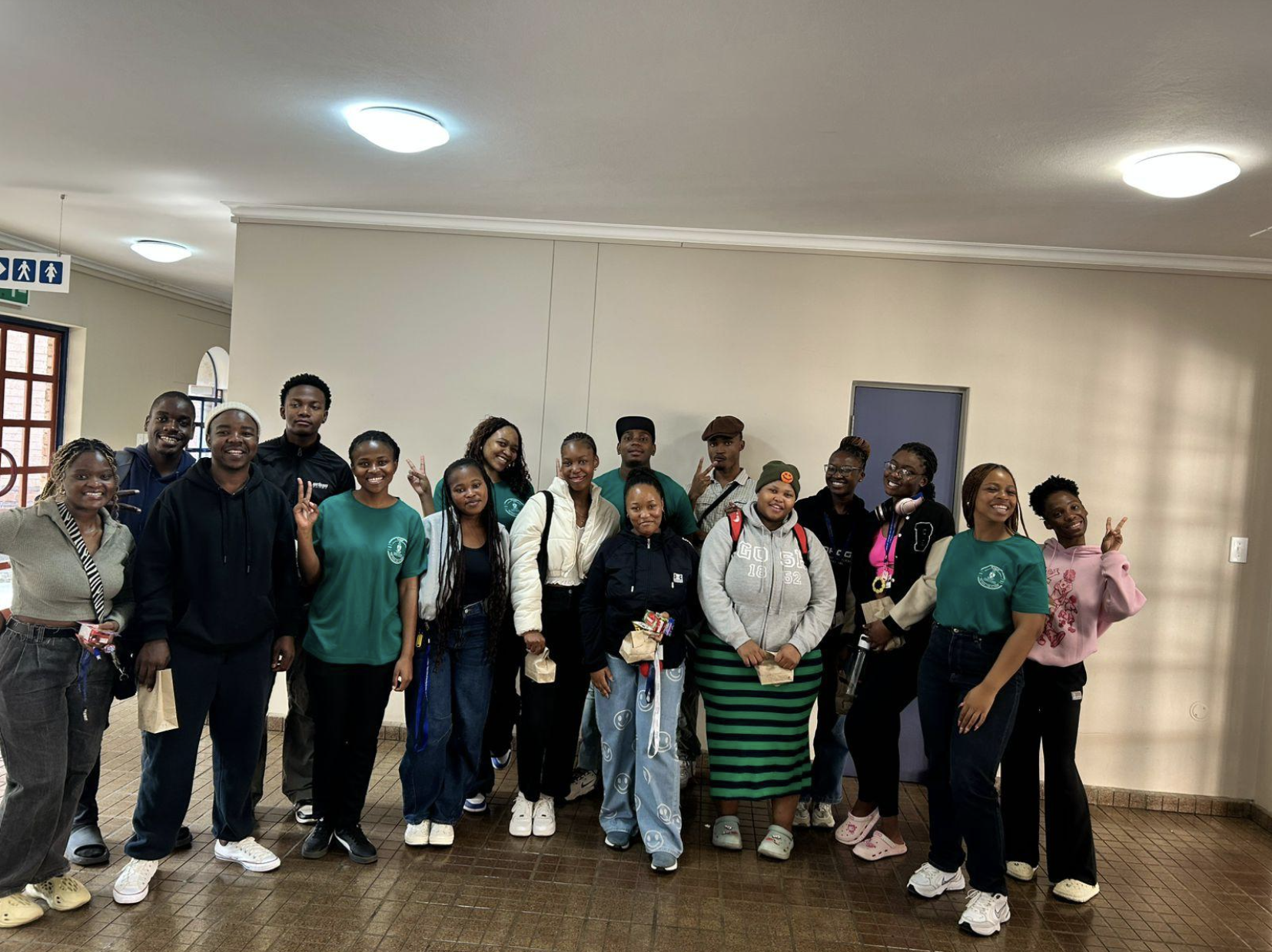
On 26 September, the Faculties of Humanities, Theology and Religion, Economic and Management Sciences (EMS), and Natural and Agricultural Sciences (NAS) hosted a peer hangout aimed at encouraging students to speak up and build their confidence. This initiative is aligned with the engagement step of “Learning the UP Way” and reflects the university’s commitment to empowering students to find their voice.
Peer Advisors across these faculties have noticed that many students hesitate to contribute in class out of fear of judgment, shyness, or lack of preparation. This often prevents them from sharing ideas, asking questions, and seizing opportunities. The hangout was designed to break down these barriers, creating a space where students could practice confidence, share experiences, and discover support systems available on campus.
The programme included fun ice-breaker activities such as “Brag Time” where students celebrated their strengths. According to the organisers, “celebrating yourself helps you recognise your progress, and passion creates confidence”.
During the session, the Peer Advisors shared practical academic strategies. One key tip was preparation. “Preparation removes uncertainty,” students were reminded. By doing small bits of research before lectures and learning new terms, students can walk into class with more assurance. Students were also encouraged to start small when speaking up. “Begin with short discussions or small groups,” the facilitators advised, “because starting small reduces pressure and builds courage for bigger contributions.”
Another theme was the importance of asking for help early on. “Confidence isn’t just about standing tall, it’s also about raising your hand and saying, ‘I need help now’. When we normalise speaking up, we all rise together,” one advisor highlighted.
The session also tackled deeper cultural and psychological barriers to confidence, such as perfectionism, negative self-talk, or constant comparison to others. Students were encouraged to replace these with practical habits like maintaining positive self-talk, practicing eye contact, and taking small risks outside their comfort zone.
Speaking to PDBY, Humanities Peer Advisor Yandiswa Tyandile expressed her joy at the event’s success: “I was extremely happy with the outcome of the event. Although there were not many students, the ones who came were very engaging, and that made it worthwhile.” She further credited the teamwork of her colleagues, Bandile Mahlauli and Alfa Baloyi (Humanities), Thembelihle Lubisi (Economic and Management Sciences and Natural and Agricultural Sciences), and Lutricia Phiri (Theology).
The Peer Advisors also acknowledged the role of their Academic Success Coaches, Mr Dana Mahan Jarod (Theology and Religion), Mr Itumeleng Holele and Ms Phindile Madondo (Humanities), and Mr Nhlanhla Maphetu (Economic and Management Sciences & Natural and Agricultural Sciences), who provided guidance and support that made the event possible.
A Humanities student, who preferred to remain anonymous, admitted he was sceptical at first about attending on a Friday instead of going back to his residence or preparing for the upcoming test week. However, he described the event as surprisingly useful: “The session was surprisingly impactful and the tips that were shared were quite helpful. I now see the importance of knowing who my Peer Advisors and Success Coaches are, because they are people I can consult, not just about academics, but also about building confidence.”
The peer hangout highlighted that confidence is not an innate trait; it is a skill that can be practiced and nurtured. Whether through small steps in class participation, preparing ahead of time, or seeking help without shame, students can learn to speak up and stand out. As one of the key messages emphasised, confidence grows when students support each other and normalise speaking up.
