
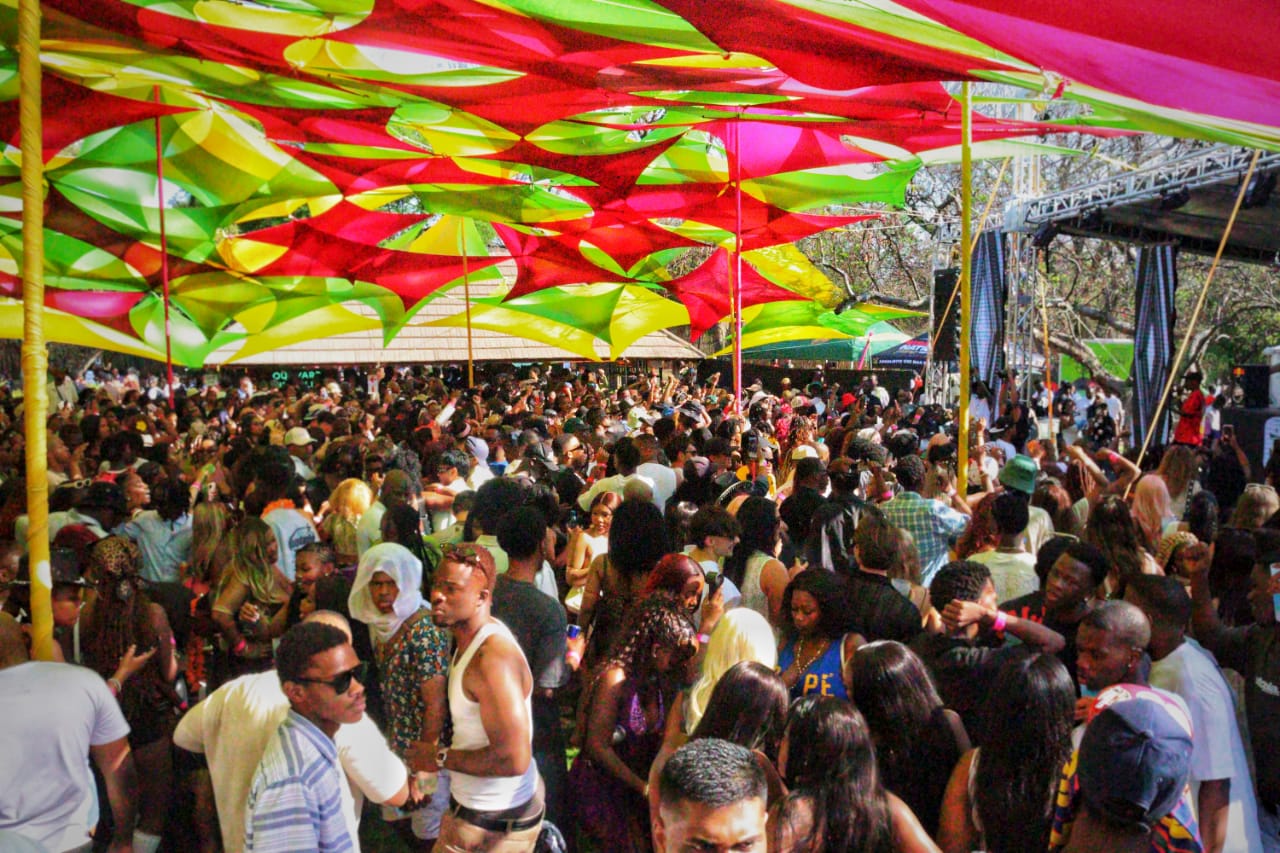
Under the spring sun at the Pretoria National Botanical Gardens, thousands of festivalgoers gathered on 16 September for the 24th edition of Lentedag – a day where live music, friendship and student culture collided.
With four stages, multiple artists, food vendors, drinks stations, games and activities spread across the venue, Lentedag 2026 offered far more than a series of performances.
For many students, however, the music was only part of the attraction.
For first-time attendee Melissa, 20, the festival was something she had wanted to experience for years. She had previously struggled to attend with her friends, but this year the group finally managed to make it happen.
“I thought it was basically just going to be people drinking and watching music,” Melissa said. “But there’s actually a lot more going on. It feels more like a whole experience than just a concert.”
Her favourite part was not a particular performance, but the atmosphere around her.
“Everyone seems to be in a good mood,” she said.
Melissa’s experience reflects what makes an event like Lentedag particularly significant within student culture. While the lineup gives people a reason to buy a ticket, the promise of spending an entire day with friends is what turns the festival into an experience.
After attending for the first time, Melissa said she would return next year – and would likely arrive earlier to make a full day of it.
That social element was echoed by returning attendee Henry, 22, who was attending his third Lentedag.
For Henry, the festival has gradually become an annual tradition with his friends. While he feels the event gets bigger every year, with increasing crowds and more artists, he said its identity remains familiar.
“I think the student atmosphere,” he said when asked what separates Lentedag from other festivals. “Lentedag feels very Pretoria and very student-focused. You’re basically guaranteed to bump into someone you know.”
That familiarity has become part of the festival’s identity. Rather than being an event attended once and forgotten, Lentedag has become something that groups of friends return to each year.
Henry said that his group started attending together a few years ago, and the festival has since become almost a tradition.
Even between performances, he said, some of the best moments came from simply spending time with friends.
The 2026 edition featured headline performances from Jeremy Loops, Van Pletzen and Focalistic, alongside Shekhinah, Chunda Munki, Dwson, Kyle Cassim, Droomsindroom, Die Piesangskille and numerous other artists.
With four stages operating across the gardens, as well as the additional EDM stage, known as the “Rave Forest”, attendees could move between different sounds and performances throughout the day. The official festival information describes the event as featuring more than 45 artists, alongside food, drinks, games and brand activities.
The variety meant that the festival could offer something beyond a single main-stage experience, with attendees able to move around the gardens, explore different stages and return to friends throughout the day.
For Kayla, 21, that variety was part of the appeal, but the opportunity to spend an entire day with friends mattered just as much.
“University can become very routine,” she said. “So having a day where you can just forget about assignments for a bit is nice.”
For students balancing lectures, tests, assignments and the general pressures of university life, Lentedag provided a temporary break from that routine.
Kayla described the atmosphere as energetic, with people dancing, taking photographs, meeting others and moving between different parts of the festival.
Her own group had started planning their attendance weeks beforehand because everyone wanted to be there together.
Asked whether Lentedag was more about the music or the social experience, Kayla gave an answer that perhaps best captures the festival itself.
“I think it’s fifty-fifty.”
The artists provide the soundtrack, but the people attending provide much of the atmosphere.
For Kayla, one of her favourite moments was not a performance at all. Her group had spent around half an hour trying to find one another in the crowd before everyone finally managed to meet up.
“It sounds stupid,” she said, “but that was actually one of my favourite moments.”
It is a small moment, but one that illustrates the role Lentedag plays beyond the stage. For many students, the day is about creating memories with the people they arrived with – and the unexpected moments that happen along the way.
Behind the festival
While thousands of attendees spent the day enjoying the performances, another group experienced Lentedag from a very different perspective: the people working behind the scenes.
For vendors and staff, the festival was not simply a day of entertainment. It was a working day – one that began long before many festivalgoers arrived and continued as the crowds moved through the venue.
For one first-time bar worker, the experience offered an unexpected perspective on an event she had never previously attended.
“I think this is the experience I actually wanted more than actually attending the event itself,” she said.
The worker admitted that Lentedag itself was not necessarily her preferred type of event, but working at the festival allowed her to experience the atmosphere while also earning money.
“I was here for free and I made money,” she joked.
The biggest challenge was the heat.
Working under gazebos for long periods made the conditions particularly uncomfortable, but she said staff were looked after throughout the day. Workers received food and water, while her manager allowed her to sit down when she became dizzy.
“They do take care of you,” she said.
Another first-time worker described the experience as an opportunity to step outside her comfort zone and interact with people.
For workers who spend the day serving customers rather than standing in front of the stages, the festival offers a completely different experience. They still hear the music and experience the atmosphere, but their attention remains focused on the people moving through the venue.
One worker said that interacting with customers and being surrounded by people throughout the day was challenging at times, particularly because of the length of the shift.
Despite this, the opportunity to experience an event of this scale from behind the scenes provided a different perspective on what goes into making Lentedag possible.
More than just a festival for vendors
For the businesses operating inside the festival, Lentedag represents more than simply a place to sell products. It is also an opportunity to introduce businesses to thousands of potential customers.
Rockio Clothing, which operates both online and from a shop at Ferndale Village Shopping Centre, returned to Lentedag for its second year.
Unlike the attendees who purchase a ticket and arrive on the day, vendors have to go through a separate process before they can set up.
According to the Rockio Clothing vendor, businesses first have to make contact with the event organisers and provide information about who they are and what they offer. If accepted, vendors pay for their trading space and are then responsible for bringing the stock and staff required to operate throughout the event.
For the vendor, the process begins with businesses finding out about the event and approaching the organisers themselves.
“Once you get invited, then you pay for your store and that’s how you get in,” the vendor explained.
From there, the responsibility shifts to the individual business to make the most of its space.
The vendor said Lentedag’s organisers provided the infrastructure and support needed to trade, while vendors were responsible for ensuring that they had sufficient stock and staff to serve customers.
“You have to have the stock. You have to have the people so you can do your service,” he said.
Having previously attended a number of festivals as a vendor, he said the quality of the organisation can make a significant difference to businesses working at an event.
His experience at Lentedag was positive, particularly when it came to the infrastructure and precautions in place for vendors and attendees.
“These organisers are very, very professional,” he said. “They provide the right things for us to trade.”
The vendor also compared Lentedag with other festivals where his business has operated.
While many events provide spaces for vendors, he said the quality of the overall setup can differ significantly. Facilities such as toilets and general infrastructure can become a problem at large events, particularly when organisers underestimate the number of people attending.
Although queues were still present at Lentedag, he said the festival compared favourably with some of the other events at which he had traded.
For him, the difference came down to organisation.
“They are very different to other organisers. They’re very professional,” he said.
The vendor estimated that between 10 000 and 12 000 people were at the festival, although this was his own estimate rather than an official attendance figure.
After returning for a second year, he said there had not been a dramatic change from the previous edition in terms of the overall experience.
“It’s the same. I wouldn’t say there’s much difference,” he said.
However, he acknowledged that organisers may have changed aspects of the layout and setup behind the scenes.
For Rockio Clothing, the appeal of Lentedag is also connected to the people it attracts.
Describing the young festivalgoers as “beautiful youngsters” and “our future”, the vendor said the large student crowd created an environment that was valuable for businesses wanting to engage directly with younger customers.
Rockio Clothing’s own identity also fits naturally into the festival environment, operating around the motto “peace, love, and rock and roll”.
For vendors like Rockio Clothing, then, the festival is not simply something happening around them. It is a temporary marketplace, networking opportunity and chance to engage directly with a large student audience who otherwise might not have heard of their store
Keeping the crowd safe
While the majority of festivalgoers were there to enjoy themselves, security personnel had a different responsibility: ensuring that the day remained safe as the crowds grew and the event progressed.
One security guard explained that the workload changed throughout the day.
The morning was relatively quiet, but as more people arrived, the demands increased. The most difficult period, he said, came towards the end of the event, when people began leaving.
Some attendees were intoxicated, while others reported lost or stolen belongings or injuries.
On the day, however, he said security had not experienced significant theft-related incidents.
One of the main issues involved heavily intoxicated attendees.
Medical personnel were present, and people who were considered too intoxicated were not allowed to enter or were directed out of the event.
For security, the job therefore extended beyond simply monitoring the crowd. It meant dealing with lost property, injuries, intoxication and the movement of thousands of people through the venue. A security guard mentioned an important part of his job was showing people where to go for the bus versus their own transport as they were leaving the festival, so no one got lost.
The security guard said the nature of the job could change depending on the time of day. The arrival of more people created one set of challenges, while the departure of festivalgoers created another, particularly when people had been drinking.
That less visible work formed an important part of the festival experience. While attendees could focus on the music and their friends, security personnel remained responsible for managing the crowd and responding when things went wrong.
A Pretoria tradition
By the end of the day, Lentedag had once again demonstrated why it has remained a fixture in Pretoria’s spring calendar.
For first-time attendees such as Melissa, it was an introduction to a festival that was bigger than expected.
For returning attendees such as Henry, it was another chapter in an annual tradition.
For Kayla and her friends, it was a temporary escape from lectures, assignments and the routine of university life.
And for the people working behind the scenes, it was a long day of serving, selling, securing and supporting the crowds that make the festival possible.
The four stages and headline performances may have provided the soundtrack, but the people moving between them provided much of the festival’s character.
From the friends trying to find one another in a crowd, to the vendor trying to keep up with customers, to the worker taking a moment to recover from the heat, to the security guard managing the final wave of festivalgoers, Lentedag was experienced differently depending on which side of the barrier you stood.
Yet all of them were part of the same event.
And perhaps that is what makes Lentedag more than simply another festival on the student calendar.
It is the music and the artists, but it is also the group of friends finally finding one another in a crowd. It is the returning student who has made the event an annual tradition. It is the first-time attendee discovering that there is more to the festival than expected. It is the vendor selling to a new customer, the bar worker dancing behind the counter and the security guard watching over the crowd.
As Kayla put it, there was perhaps only one word that could capture the experience.
“Chaotic,” she said with a laugh.
“But in a good way.”
Image: Mpho Mahlangu

Cayden Coetzer