
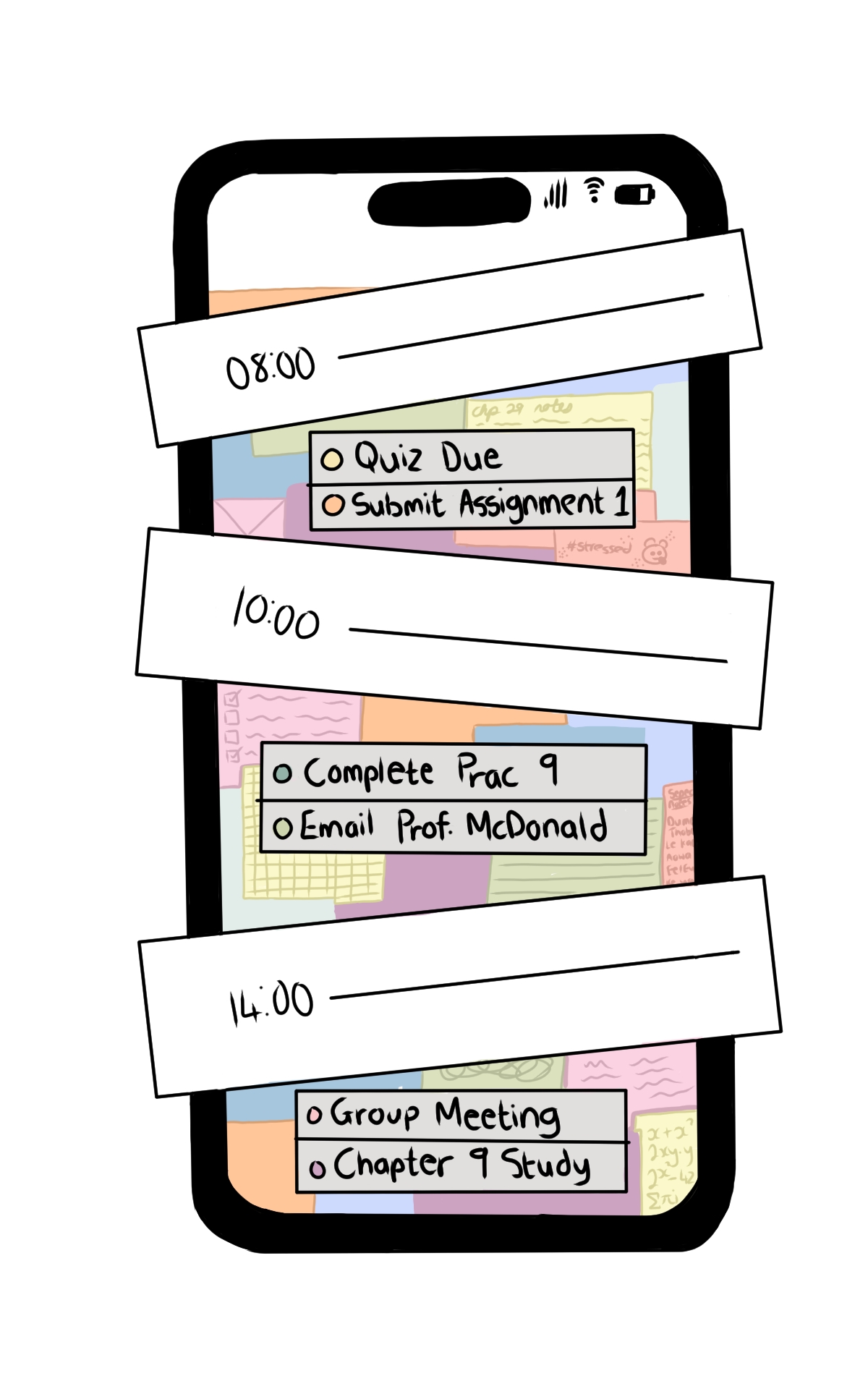
Attendance, deadlines, and reminders. Teachers, timetables, and monitoring. In high school, this is a student’s life. A routine of constant check-ins, endless supervision, and the subtle but firm nudge to get things done.
Welcome to your first year of university. You are on your own now.
The greatest shock about university life is not the workload, the size of the campus, or the number of people – it is freedom. After years of bells, blazers, attendance registers, and constant supervision, independence feels exhilarating. But once timetables are set and the novelty wears off, a quiet reality sets in: no one is watching. There are no reminders, no warnings, and no one to stop things from slipping until they have gotten out of control.
University freedom is strange because it never announces itself as a responsibility. It disguises itself as “the due date is a week away” and “I’ll do it later”. This freedom presents itself as free calendar days and minimal pressure. However, this freedom, without realising it, transforms into a burden. The key thing to understand is that this rapid freefall is not a reflection of laziness or incompetence. But rather, it is a lesson you were never taught: freedom requires discipline.
First year has a way of letting one skipped lecture turn into two, and then a rushed reading quiz becomes one you have missed altogether. The sinister part of this gradual slip is that it often goes undetected. It never feels like a drastic gap – it is just enough to keep you slightly out of breath. Everyone’s first reaction is to overcorrect: to create some sort of colour-coded timetable or to cut out sleep. This is not enjoyable, and it also is not sustainable. All you really need to do is to survive, to stay afloat. It is crucial to understand that failing – whether it be a test or an assignment – is not a personal flaw. It is a very human part of learning how university works. These moments of failure matter. Failing teaches you consequences in a way that success never quite does. Failure sparks growth – growth to learn what your limits are, how to manage your time, and which habits work for you.
Sometimes, submitting an imperfect assignment is better than submitting no assignment at all. Just pass the test, leave the distinction for now. Attend the lectures and the rewards will come sooner than you expect. Learn what hours of the day are optimal for your best studying. Use the library. Engage with your peers – a little help never killed anyone.
University offers space to succeed, but there is also room to disappear. Independence is about using your autonomy when no one is watching. While this sounds intimidating, it can be used to your advantage. Being able to conduct your life according to your own rules is a privilege – it simply takes time to learn how to do it well.
University freedom is not free. It requires time, energy, and plenty of trial and error. But it gives you something very valuable: it teaches you how to work, not just how to perform well.
Welcome to your first year of university.

Visual: Mpho Makwela
