

Women have been the custodians of South African culture for a very long time. This means that for decades, they have been the primary transmitters and preservationists of cultural values, norms, and traditions. They have done this in various ways, which include storytelling, music, food, and visual art.
Storytelling
“Nonwane! Nonwane!”, your grandmother says. “Ke leketla!”, you answer, and the age-old tale of Mmutla le Tau begins. Folktales and myths are staples in many South African cultures, often passed down by matriarchs. When we were young, these stories were just for entertainment, but only in retrospect do we recognise the invaluable nature of not only the tales themselves but the people telling the stories. The stories often involve themes of courage, tenacity, and the importance of Botho/Ubuntu, and the storytellers – women – act as oral archives containing information entrusted to them by generations prior. The Annual Nozincwadi Literary Storytelling Festival by legendary author and storyteller Dr Gcina Mhlophe takes storytelling far beyond the cosy confines of our grandmothers’ homes and spreads it across South Africa. Not only does it encourage young people to write and tell their own stories, but it also acts as a hub to celebrate African literature and to pass down oral traditions.
Music
“Thula thu, thula nana, thula sana, thul’ubab uzobuya, ekuseni”, our mothers once sang to us. Folksongs are one of the first forms of cultural transmission we were introduced to, even before we could speak or understand language. Our mothers sang us lullabies in our mother tongues – lullabies that were once sung to them by their mothers. This continuous performance has acted as a tool to preserve our indigenous languages. When we eventually outgrow the songs that soothed us as children, our mothers now use those very voices to usher us through important events such as weddings, ancestral ceremonies, and initiations. The songs they sing have no known origins and seem to be as old as civilisation itself. Award-winning songstress Thandiswa Mazwai, who is known for her deeply spiritual and revolutionary music mostly sung in isiXhosa, once said, “I’ve become part of a thread throughout time… part of the song my great-grandparents used to sing… and I’m continuing the lineage of using our voices.”
Food
“Diyamaleng ga di fahle”, the proverb says. Traditional farming methods such as preserving seeds for the next farming season are unfortunately lost traditions that have not been able to overcome modernity. But traditional food preparation practices such as fermentation have stood the test of time, and at almost all traditional South African ceremonies, umqombothi is a staple. The multiday preparation of the traditional beer has always been exclusively done by women for decades and requires infinite patience. Traditional foods made by our grandmothers and mothers, such as mogodu, umqushu, and mashonja, are cooked without recipe books because the process of making these foods has become somewhat of a memory script to them – one they continue to encode into their descendants. Onezwa Mbola, a best-selling cookbook author, uses food preservation techniques such as salting, canning, and drying to make hearty meals for her child that were once made for her. She also harvests seafood ethically and sustainably, utilising methods that were taught to her as a young girl living in a coastal village in the Eastern Cape.
Visual Art
“Inhliziyo ikhuluma ngomdwebo”, the saying goes. Beadwork, paintings, and sculptures are one of the most vibrant forms of cultural transmission and preservation. Across South African cultures, women use visual art as a form of cultural expression: they paint using indigenous tools such as chicken feathers and their fingers to maintain cultural authenticity. Not only is the art decorative, but it also functions to communicate emotions such as joy and sadness. Dr Esther Mahlangu, an internationally renowned Ndebele visual artist, first learned how to paint the vibrant Ndebele geometric patterns from her grandmother and mother at a young age, and she has made it one of her life goals to pass what she learned on to younger generations, famously saying that it was her “passion to transfer this skill” to generations after her. She opened the Esther Mahlangu Ndebele Art School in her hometown in Mpumalanga to teach the indigenous art form to the youth.
Women such as Dr Gcina Mhlophe, Thandiswa Mazwai, Onezwa Mbola, and Dr Esther Mahlangu are only some of the hundreds of thousands of South African women who have taken what they have learned from the women in their lives and made it their personal mission to carry those legacies through various art forms. Women remain the heart and soul of cultural continuity, ensuring that culture thrives and endures throughout generations.
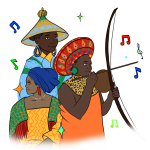
Visual: Gabriella le Roux
