
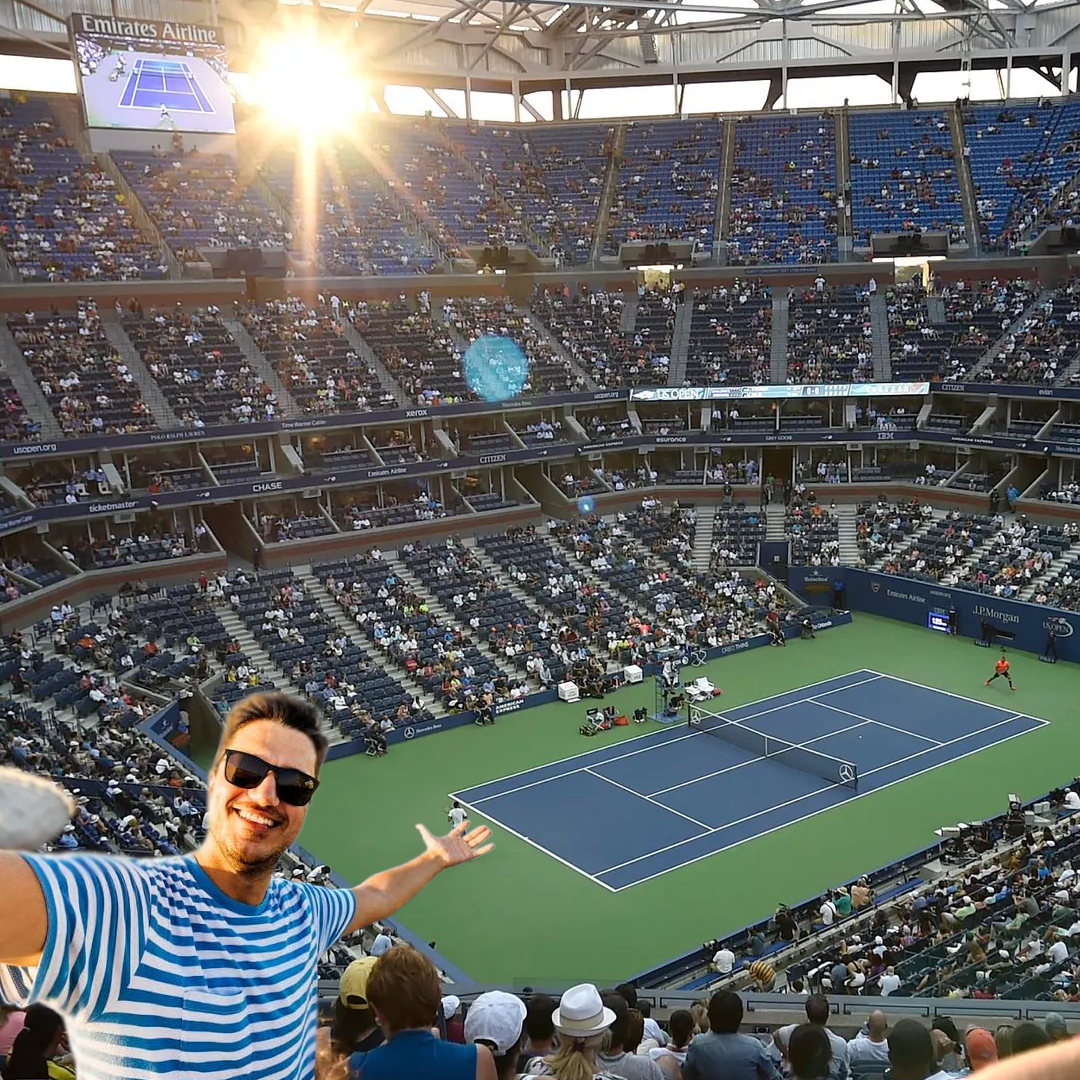
Picture this: you’ve just dipped into your savings and spent hundreds of dollars on a ticket. Your feet ache from the endless queues, and your seat is somewhere in the nosebleeds. But none of that matters anymore. The moment you’ve been waiting for is finally here. The air fizzes with anticipation as your favourite players take to the court. But, instead of the crisp pop of a tennis ball against a racket, you hear your TikTok For You Page coming to life.
Welcome to the age of sport as content.
The 2026 US Open delivered its fair share of headline-making moments, but not all of them happened on the court. A viral video showing spectators filming content during a match reignited a debate about tennis etiquette, influencer culture, and whether sporting events are slowly becoming another backdrop for social media.
For some, the incident represented an innocent misunderstanding of tennis etiquette. For others, it demonstrated a growing disregard for the traditions of a sport where silence during play is more than a polite suggestion.
Even tennis star Naomi Osaka acknowledged the tension. Speaking about the controversy, she emphasised the importance of familiarising oneself with tennis etiquette while recognising that creators could introduce the sport to entirely new audiences.
And here lies the dilemma: are influencers ruining the sporting experience, or are they helping secure its future?
The Prince of Influence
The relationship between sport and social media is hardly new, but the scale of creator involvement is becoming increasingly difficult to ignore.
Major tournaments, including the FIFA World Cup, have embraced creators through exclusive access and behind-the-scenes experiences. Cerys Holliday, writing for Creative Salon, even described the phenomenon as “The World Cup of Influencers.”
Tennis has followed suit. According to Digiday, approximately 100 creators received official accreditation for the 2026 US Open, nearly double the previous year’s figure.
It is worth distinguishing, however, that the spectators involved in the widely discussed disruption during Naomi Osaka’s match against Anastasia Zakharova were reportedly not part of the tournament’s officially accredited creator programme.
For sporting organisations, the attraction is understandable. A creator with hundreds of thousands of followers offers access to audiences who might never willingly sit through a three-hour tennis match. A single piece of content could introduce someone to a player, a tournament or even an entirely new sporting obsession.
But exposure is not necessarily the same as fandom. Millions of views make a tournament trend online, but how many of those viewers will return when the cameras, celebrity guests, and sponsored hospitality experiences disappear?
And while sporting organisations chase new audiences, some of their existing supporters are beginning to question where they fit into the picture.
The Game becomes the Backdrop
For traditional sports journalists, the rise of influencer culture raises questions about the changing value of professional sporting coverage.
A 35-year-old aspiring sports broadcaster interviewed by The Athletic expressed concern about a media landscape in which social media content can attract more attention than conventional broadcasting.
It is a shift that challenges traditional ideas about expertise and influence. Where sports journalism has historically valued reporting, analysis, and sporting knowledge, social media often rewards personality, entertainment, and engagement.
The tension extends beyond the press box.
Writing on Substack, Daniel-Yaw Miller described attending tennis with a friend and struggling to concentrate on the match as nearby spectators photographed their outfits and filmed TikToks during play. His account raised a familiar frustration: when exclusive sporting experiences become fashionable social occasions, does the sport itself run the risk of becoming secondary?
Yet there is an important distinction between feeling overlooked and actually losing access. An influencer occupying a sponsor’s hospitality seat does not necessarily mean a lifelong supporter has been denied a ticket. Similarly, creator accreditation does not automatically establish that a journalist has lost their place in the press box.
Still, the perception of unfairness raises an uncomfortable question about what sporting organisations choose to reward: loyalty, expertise, or visibility.
Gatekeeping or Genuine Grievance?
But who gets to decide what makes someone a real sports fan?
Is it the number of matches attended? Their knowledge of the rules? The years they’ve spent supporting a particular player or team?
Every lifelong supporter was once a newcomer. Everyone has experienced the confusion of learning a new sport, discovering its traditions, and figuring out what makes it special.
Someone attending the US Open for the fashion, atmosphere, or celebrity sightings might leave with unexpected appreciation for tennis. Dismissing that person simply because they cannot explain a tie-break risks turning sporting culture into an exclusive club.
After all, fandom must begin somewhere.
But there is a difference between being unfamiliar with a sport and disrespecting the experience of those around you.
Not knowing when to applaud is one thing. Disrupting a point to film content is another.
That responsibility should not fall solely on content creators. Brands and sporting organisations inviting guests have a role in communicating expectations of the event, while creators have a responsibility to respect those expectations.
The issue, then, may not be whether influencers belong in sporting spaces, but how those spaces accommodate new audiences without alienating the people who have supported them for years.
A Seat for Everyone?
Sport has always been more than the final score. It is about belonging, collective anticipation and the extraordinary ability of a single moment to unite strangers.
Content creators have the potential to bring the experience to people who might otherwise never discover it. Traditional supporters, meanwhile, provide the passion and loyalty that make those experiences worth sharing in the first place.
Neither contribution needs to invalidate the other.
So, are content creators taking over sporting events?
Not necessarily.
Sport is evolving alongside the digital world, and the way audiences discover, consume, and celebrate it is changing. The challenge for sporting organisations is ensuring that commercial opportunities do not overshadow the traditions and communities that make sport meaningful.
Perhaps the question was never whether someone has a million followers or knows every rule in the book.
Maybe it is whether, when the next point begins, everyone can put their phones down long enough to enjoy it together.

Visual: Daniel Green
