
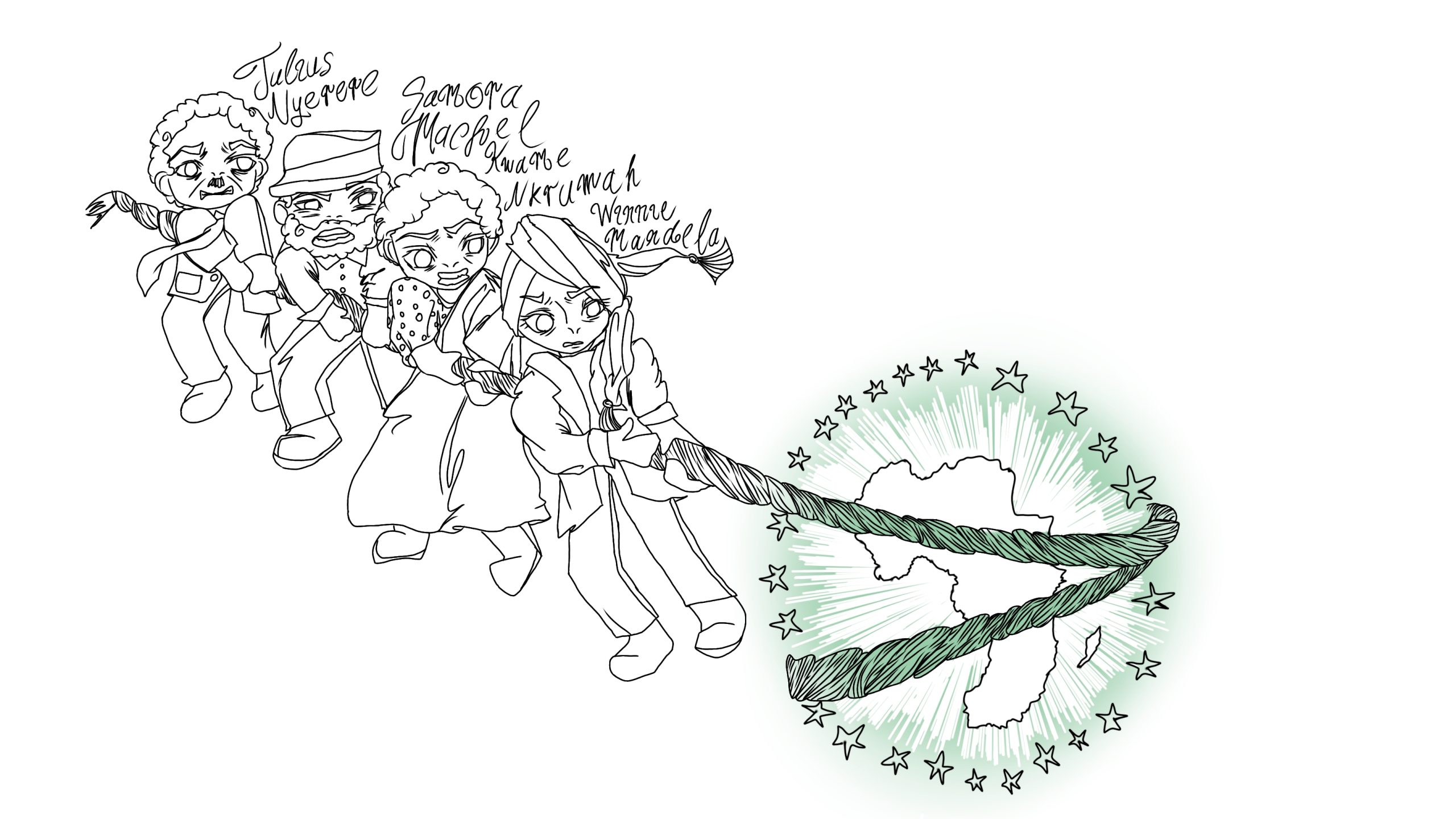
South Africa’s political discourse this year has been largely dominated by one thing: immigration. Protests have taken root across the nation, pressuring migrants, both documented and undocumented, to return home on a scale and level of organisation not seen in years. This increased emphasis on nationalism and hostility towards our African neighbours resparks an old debate: the viability of Pan-Africanism
Wave upon wave of exclusionary nationalism has entrenched itself in South Africa’s political dialogue, blaming issues ranging from poor service delivery to unemployment on the presence of migrants in our nation and putting pressure on our government to not only deport them en masse, but also to distance ourselves from our African neighbours diplomatically. Although this is a sensitive topic, it is one that needs to be analysed critically. To what extent is immigration responsible for the problems facing our country, and instead of alienating ourselves from the continent, what would it mean for us if we leaned towards a more Pan-Africanist perspective?
South Africa’s political and economic environment has made it the destination of choice for migrants and refugees across Africa since the dawn of our democratic era in 1994, with some estimates placing our migrant population at a maximum of around 3 million people (5% of the total national population). This relatively visible population has oftentimes been scapegoated for many of the issues plaguing South Africa’s contemporary society, from drug abuse to crime, and even GBV. In reality, however, according to our nationally published crime statistics, migrants represent a disproportionately small amount of crimes committed in the country. Furthermore, migrants are often accused of putting stress on our public services, such as healthcare, often diverting the blame from government corruption and mismanagement to individual people who are just as deserving of service as anyone else. The response to these perceived threats has been a crackdown on migration and the demonisation of other African nations, a response that is not only self-destructive in the immediate term, but also detrimental in the long term. So, what if we pivot? What if we make a renewed case for Pan-Africanism?
To understand why pooling together would be more beneficial than not, we need to understand the global context in which we live. For centuries, Africa has been mercilessly exploited by Western powers. From colonialism in the 18th to 20th centuries to the newer strains of imperialism and neo-colonialism underdeveloping our continent in the contemporary era, the West employs a “divide-and-conquer” strategy to maximise the efficiency of their exploitative economic practices. Evidence of this strategy is revealed through the colonialism of the Congo, where colonial authorities stoked conflicts between ethnic groups to prevent a unified anti-colonial front. In short, it’s easy to prey on a disorganised victim.
By pooling our economic might and sharing sovereignty over our resources and capital, we can better establish and maintain economic independence from the Western multinational corporations which still largely hold a monopoly over South Africa’s mining industry. It is not the migrants that have led to the sweeping unemployment and poverty our nation suffers, it is the billionaires of South Africa and beyond who have constructed our economy in a way that preys on the vulnerable and does nothing but extract at the expense of people and the environment. By working together, prioritising other African nations as trade partners and putting a renewed focus on utilising and refining these resources in Africa rather than exporting them as raw resources, we could enter a new period of economic growth.
Pan-Africanism isn’t without its drawbacks, however. Let’s revisit the migrant problem, or specifically, its sources. According to the Armed Conflict Location & Event Data Project, many countries in Africa are experiencing some form of military conflict, ranging from insurgencies like in Mozambique to outright civil wars in places like Sudan and Ethiopia. Africa is the continent which has, by far, the most unstable situation around armed conflict on Earth. Although Europe and American interference often played sizable roles in starting them – for example, in the wars in Libya, Somalia, and the Congo – it is ultimately left to us to clean up the mess. Hundreds of thousands are displaced annually and infrastructure, both physical and institutional, is eroded in these warzones, which poses the question of whether, regardless of feasibility, Pan-Africanism is even desirable when relatively stable nations like ours will have to divert our resources to peacekeeping and stabilisation efforts across the continent as a whole.
What we all need to understand is that people have, and always will be, stronger united than divided. Whether that means a more united Africa, or simply less xenophobia on the homefront, it is important to realise that the divide-and-conquer tactics used by colonial oppressors are far from being retired. At the moment, this rhetoric seems to be winning. What we need more than anything, is to pool together from a grassroots to a regional level. The only way we can fight for our sovereignty is by coming together, and embracing a new Pan-Africanism, one rooted in unity against division.

Visual: Saahirah
