
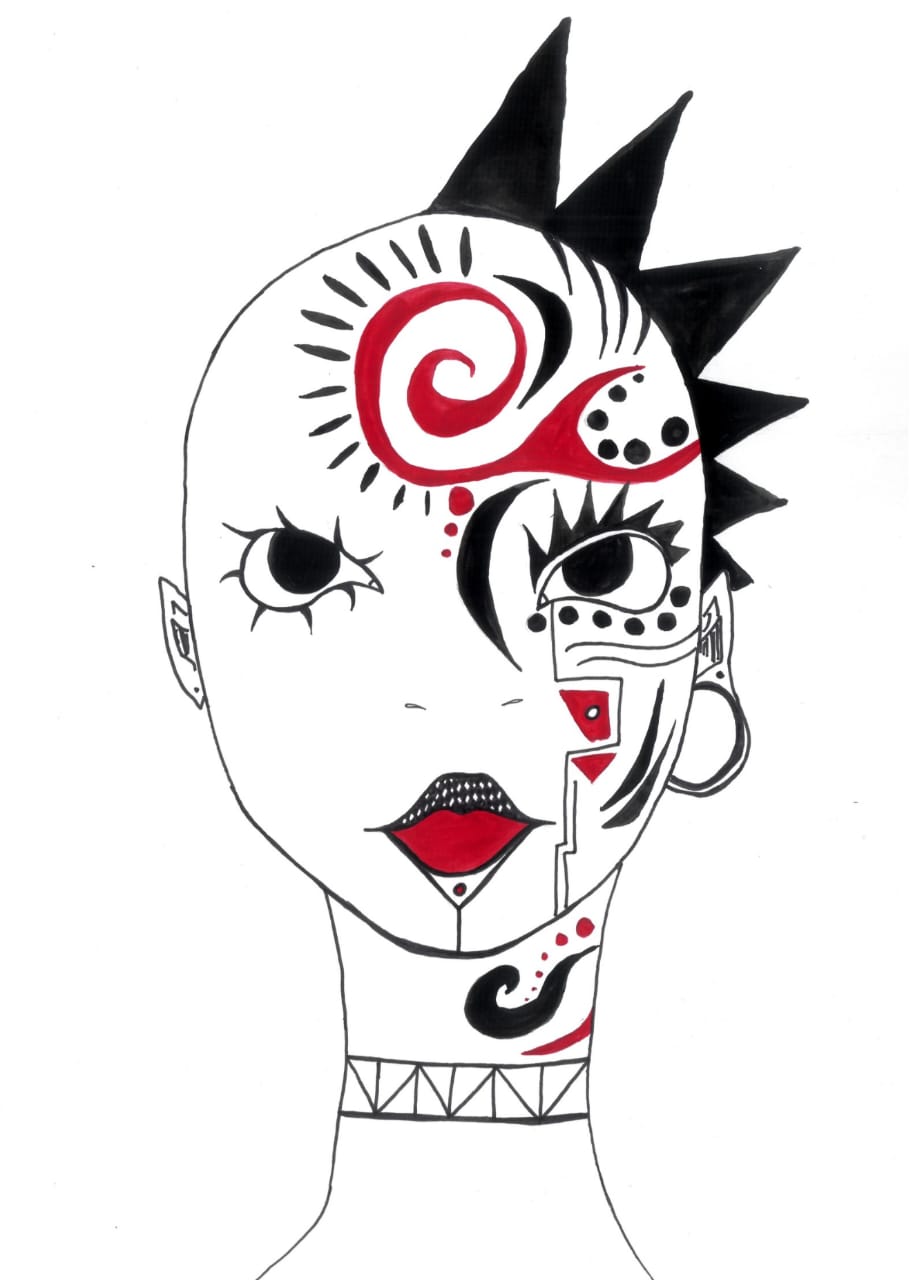
Our bodies have always been more than just vessels that try to keep us alive and healthy; they act as sites for creativity, cultural identity and aesthetic expression. In Africa, body modifications such as scarification, earlobe stretching, lip plates and teeth removals transform us into sentient artworks that tell our stories before we utter a word.
Scarification is a process in which a piece of skin is pulled up using a thorn or hook, and the raised skin is then sliced or cut to create a wound. The fresh wound is then irritated by rubbing ash or charcoal on it over time, so the skin can heal by forming keloids. The Nuba people of Sudan use this method to signify milestones in a woman’s life. At puberty, they are marked on their chests, forehead and abdomen. When they first start menstruating, they receive additional marks under their breasts, and after bearing and weaning their first child, their final markings are etched on their sternum, back, buttocks, neck, and legs. Beyond milestone indicators, these geometric scars are also used for healing and protection; scars above the eyes are believed to sharpen vision, and those on the temples ease headaches.
The Maasai group from some parts of Kenya and Tanzania mainly focus their bodily modifications on one part of their body, the ear. Enkipea (earlobe piercing) and earlobe stretching signal a person’s social rank and maturity. The size and length of the lobes symbolise life experience, meaning elders in the community have the most elongated and dramatic earlobes, as they possess the most knowledge. For women specifically, stretched earlobes become a canvas for heavy, elaborate beaded leather flaps draping down their shoulders called Enkarewa. The heaviness of this jewellery further stretches their ears and acts as a marker for their lineage, social and marital status.
In Ethiopia, the women of the Suri and Mursi tribes (collectively known as the Surma tribe) wear lip plates called dhebi a tugoin, symbols of beauty, fertility and marriage eligibility. Girls usually begin the process of getting one in their teens, and it is believed by some that it can influence a woman’s dowry (though there is no consensus on this). The Surma women take pride in the creation of their lip plates; they include colourful decorative patterns and embellishments, showing how this practice holds both cultural and aesthetic value.
The passion gap (also known as the Cape Flats smile) is a form of dental modification practised by some members of the Coloured community in South Africa. It involves purposely removing healthy front teeth as either a rite of passage, a symbol of social status among peer groups or simply a fashion statement. This practice has been around for over 60 years, and it has historically functioned as a way for the youth to assert control over their bodies and to signify strength, independence and acceptance into the community’s street culture. The passion gap also allows for people to wear dentures locally known as valstanne. These dentures are also modified with gold caps and diamonds to display personal styles.
These different cultures from all over Africa illustrate the dynamic nature of our bodies, as they act as locations where our cultural identities and individual expressions coexist; different modifications signal healing, rites of passage, wisdom, survival, beauty and personal style. Ultimately, body art proves to us that creativity does not only exist in text or canvasses but on the human being themselves.
Visual: Mila Jordaan
