
Netflix is adding their “woke agenda” to One Piece. This is the sentiment expressed by many disgruntled people regarding the new One Piece live action – particularly in relation to its casting. The slang term “woke” was initially used to describe the state of being aware of political issues faced by marginalised communities, but has, in recent years, become appropriated by more conservative groups to critique scenarios in which they feel politics and political agendas have been placed in spaces where they do not belong. The “wokeness” critique seems to be used as a blanket statement against any and all inclusion of marginalised groups in media – as if their very existence is both a political statement and a deviation from the norm.
It seems every season comes with a new casting choice that has generated a degree of discourse. In season one, we meet Koby, played by Morgan Davies – a trans man. Despite the actor’s trans identity having no impact on the character or the story, this was apparently an early example of “wokeism” seeping into One Piece. To describe Koby’s casting as being a product of the push for diversity equity and inclusivity, as some have argued, is to imply that simply being trans makes a person a political pawn in everything they do. To treat the inclusion of marginalised groups in any position as though it is merely an extension of the “woke agenda” is to strip them of their humanity and reduce them to one facet of their identity. This also implies that marginalised people are a deviation from a norm. As though if someone is not a cisgender white person, they must be a diversity hire.
In season two, Bridgerton’s Charithra Chandran was cast to play Nefertari Vivi. Ironically, the revived discourse around “race-swapping” in the media is similar to the conversations that began when Bridgeton was first released. Vivi is a character from a desert kingdom that draws inspiration from Ancient Egypt, Arab cultures, and other North African and Asian nations. Many expected Vivi to be cast with an Arab actress and, while it is valid to have had such an expectation, many disgruntled fans began to turn to colourism and racism in their criticism of the casting. Emily Rudd, Nami’s actress, took to Instagram to address fans’ reactions, saying that “perceived ‘canon’ does not excuse blatant racism or hate of any kind”. In the blatant bigotry used in fans’ expression of unhappiness, it becomes increasingly clear that the criticism surrounding Vivi’s casting is less about wanting more accurate representation and more about people looking for an outlet to offload their racism.
One of the most recent (and possibly most outrageous) instances of backlash came with the casting of Bon Clay. Bon Clay has always been a fan favourite, and the backlash around his casting has left hardcore One Piece fans perplexed. Bon Clay will be joining the One Piece ensemble in season three, and will be played by non-binary actor Cole Escola. Bon Clay is canonically genderqueer, so this casting decision only makes sense. But for some reason, fans (and non-fans) have taken to the internet to accuse Netflix of pushing the elusive “gay agenda” in casting Escola for this role.
The thing about One Piece is that it is, in fact, a political story. Even from the East Blue Saga, we see the marines being portrayed as a tyrannical group of law enforcement, addressing ideas of abuse of power by political authorities. What makes One Piece political is its story and themes, not the diversity. One Piece’s story includes devil fruits which give people powers, an island in the sky, and mermaids. Incorporating trans people or people of colour – people who actually exist in real life – into the story can barely be considered “unrealistic” when weighed against other parts of the story. If the fishmen who make up the Arlong Pirates did not turn heads, then why should the genderqueer subjects of the Kamabakka Kingdom?
We live in a world with billions of people who all have unique backgrounds and experiences. The world is so diverse, and to reflect this in media is only natural. So, why does the One Piece live action see an amount of backlash that the anime did not necessarily get? Firstly, it seems that the live action has simply brought One Piece to the screens of people who were otherwise unfamiliar with the source material. YouTuber Jon Del Arroz made a ten-minute video describing One Piece as “woke propaganda” despite having admitted to being unfamiliar with both the manga and anime. This brings to light the issue of backlash that is not based on the understanding of the source material, but is rather a result of people projecting their own politics and conceptions of normality onto mainstream media. Anyone who has actually seen or read One Piece understands that Eiichiro Oda’s (the creator of One Piece) storytelling is political. However, Oda never tokenises his diverse ensemble. Diversity is only natural in a story about exploring different corners of the world.
Another reason the live action may have brought rise to more discourse than the anime or manga is that it seems bigotry needs victims. It is much easier to point to a real human and make them the victim of transphobic or racist remarks compared to doing so to two-dimensional drawings.
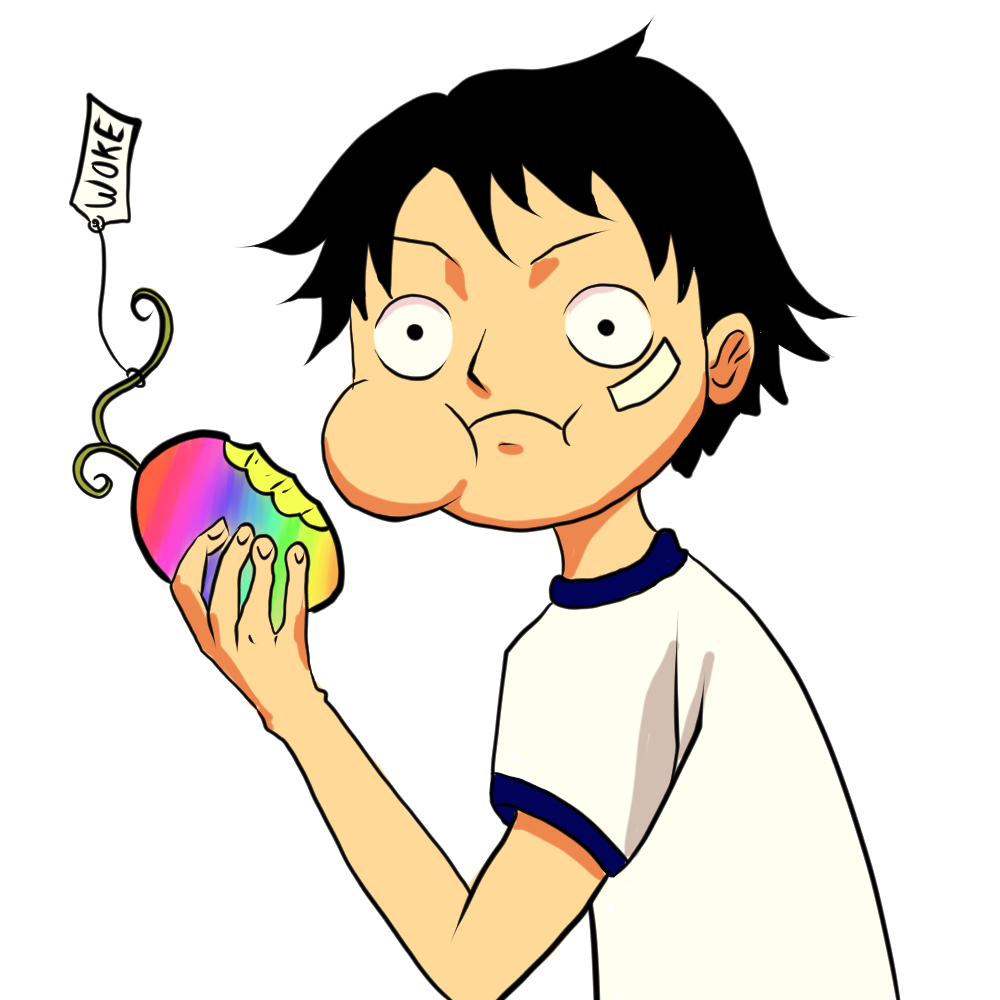
Yes, the One Piece live action features a diverse cast, but does this mean it is promoting a “woke agenda’? Well, the answer to this depends on whether you believe real people can be promoting an agenda by simply existing. If diversity in and of itself can be considered to be a politically motivated choice and a deviation from the norm, maybe it is time we as viewers took a bite of the “woke-woke” fruit and got real with ourselves about why diversity even bothers us. Until then, we must enjoy the story, characters, and politics that come with Luffy’s journey to be King of the Pirates.

Visual: Gabriella le Roux
