
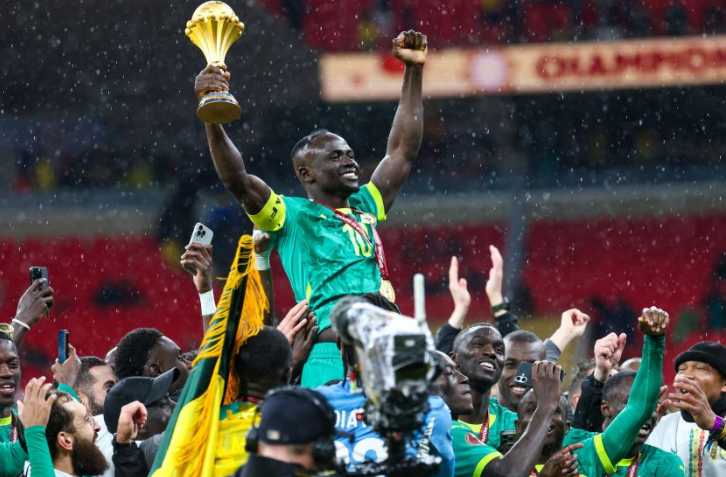
The sacking of narratives often begins at full-time, but the story of this Africa Cup of Nations (AFCON) final started long before the first whistle. Senegal’s victory over Morocco will be recorded in history as a second continental title, yet the match itself unfolded as something far more unsettling: a final where football struggled to survive beneath controversy, disruption, and an erosion of trust.
In the days leading up to the final, Senegal’s preparations were already compromised. Concerns were raised over team security, and more troublingly, over competitive fairness. Senegal’s training pitch was positioned directly next to Morocco’s, thus removing any semblance of tactical privacy. At a continental final where margins are razor-thin and preparation is sacred, this lack of secrecy was not a minor inconvenience but a structural failure. It reinforced the perception that Senegal was being asked not only to compete against an opponent, but against circumstances tilted against them. That context matters, because it shaped everything that followed.
Once the match began, tensions quickly translated onto the pitch. Senegal saw a goal disallowed under contentious circumstances while a series of Moroccan fouls went unpunished. Each decision compounded the sense of imbalance until the moment that broke the contest open – a penalty awarded against Senegal following a VAR review late in the game. The decision was decisive not only in footballing terms, but emotionally too. It pushed the Senegalese players beyond frustration and into protest.
Their decision to walk off the pitch was extraordinary and divisive. It forced officials, fans, and viewers into an uncomfortable confrontation with a long-simmering question: what happens when players no longer trust the system meant to govern the game? While such an act cannot be easily justified within the rules, it did not emerge in a vacuum. It was the product of accumulated grievances – of feeling unheard, disadvantaged, and ultimately disposable.
Crucially, the match did not collapse entirely. Sadio Mané’s leadership proved decisive, not through goals or flair, but through restraint. He urged his teammates back onto the pitch, choosing completion over collapse. Senegal regrouped, survived the penalty, and, in extra time, found the winning goal through composure rather than chaos. In a final that threatened to dissolve into farce, Senegal won by staying present when everything around them encouraged disengagement.
The aftermath, however, revealed how little unity the result inspired. FIFA president Gianni Infantino was swift to condemn Senegal’s conduct, focusing narrowly on the walk-off while largely sidestepping the conditions that provoked it. Moroccan reactions ranged from frustration to outright hostility, including claims questioning the legitimacy of Senegal’s triumph and suggestions of legal action. Most troubling was the resurfacing of a social media post attributed to Moroccan player Yassir Zebiri, implying that “Africa doesn’t deserve Morocco”, a statement that struck at the very foundation of continental solidarity.
What followed was not simply outrage: it was introspection. The AFCON final exposed uncomfortable power dynamics within African football: between hosts and visitors, officials and players, authority and accountability. It raised questions about who is protected by the system, who bears its consequences, and whose grievances are deemed acceptable.
On sporting merit, Senegal deserved to win. They scored the decisive goal, held their nerve, and finished the match. However, the way that the final unfolded should trouble everyone invested in African football’s future. A tournament’s showpiece should not end in protests, condemnation, and fractured identity.
This was more than a chaotic final. It was a warning. Until governance, officiating standards, and competitive equity are treated with the seriousness they demand, African football will continue to risk moments where the drama overwhelms the game itself.
And no trophy, however deserved, should come at that cost.
