
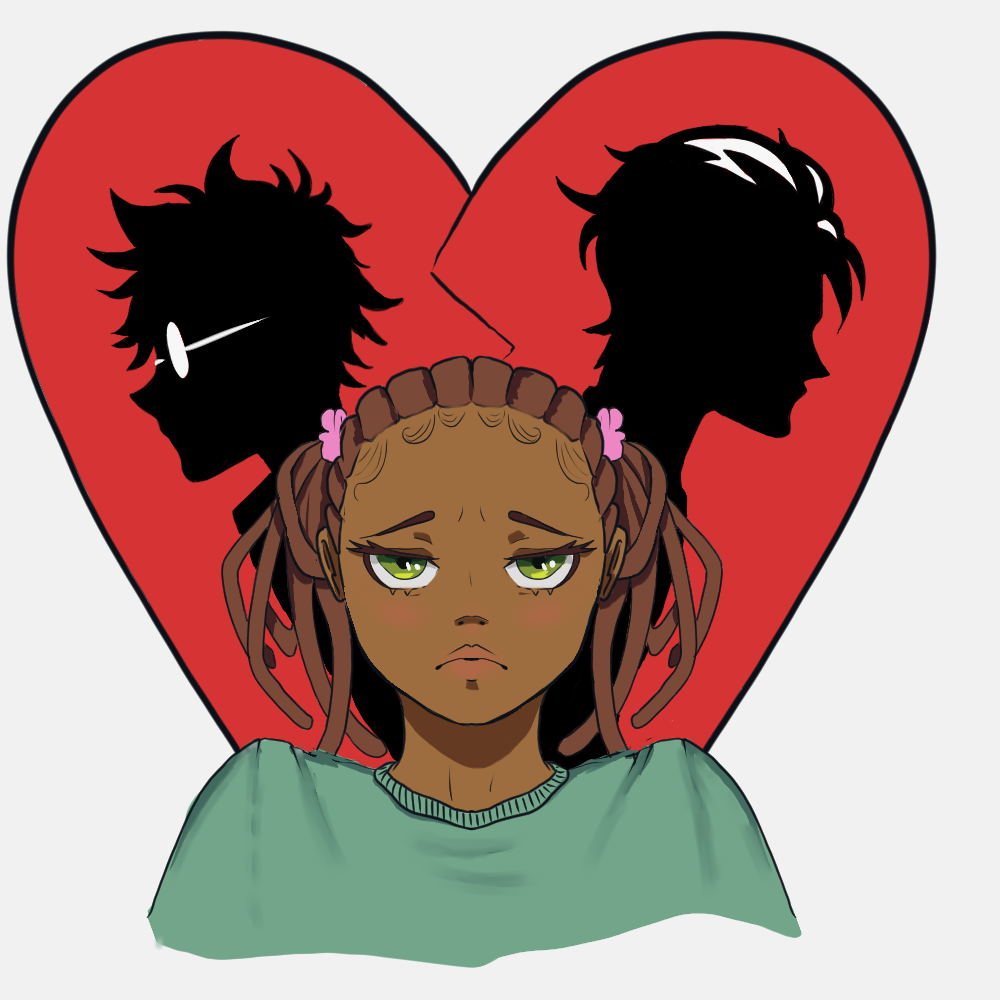
At first glance, the love triangle might appear to be just another tired, overused plot device or trope worn thin by centuries of romance novels and blockbuster franchises. However, it has not only endured but thrived in pop culture. The trope has given rise to late-night blog posts, fanfiction longer than the original source material, and internet debates more heated than actual politics. People care about love triangles a lot. That’s because, when it is done right, a love triangle is not just about romance. It is about identity, longing, and the parts of ourselves we project onto fictional lives. Teens reading Little Women in 1868 were facing the same age-old question that teens in 2009 were with The Vampire Diaries… whose team are you on?
The Team A vs Team B argument has been around for so long that two distinct archetypes have emerged. Each love interest falls into the group of either a “black cat” or a “golden retriever” boyfriend. “Black cat” boyfriends are mysterious, brooding, and misunderstood, while the latter is outgoing, loyal, and friendly. In terms of Twilight, Jacob is the golden retriever and Edward is the black cat. Once you see this characterisation, it is impossible to miss. Team A and Team B are rarely just about romantic compatibility; they represent different futures, different versions of the self. The triangle becomes a metaphor for personal growth, for the split between who we are and who we want to be. The person you choose can change everything – the life you live, the person you become. Marrying Jeremiah would lead to a completely different future for Belly than choosing Conrad. One is a frat boy who says he majors in “Beerology” while the other is a med student at Stanford… The choice is clear to me, but either way, she still gets the beach house. However, there’s a quiet allure in the symmetry of it all: one heart but two paths.
In most stories, the love triangle is not just a subplot – it is the plot. The entire narrative unfolds because of the romantic tension. Think of Bridget Jones’s Diary, where the drama, comedy, and character growth are all filtered through Bridget’s indecision between Mark and Daniel. Likewise, in Never Have I Ever, while there are subplots, the central tension – the thing viewers come back for – is Devi ping-ponging between Ben and Paxton. The triangle consumes the spotlight, and the rest of the narrative world bends to accommodate it.
However, there are notable exceptions where a love triangle exists but is not the driving force of the narrative. The Hunger Games is a prime example. While Katniss is caught between Peeta and Gale, her story is not about choosing between them. It is about survival, resistance, and the trauma of war. The romantic tension is present, but it simmers beneath larger themes of political manipulation, rebellion, and identity. The triangle adds emotional complexity, but it never overshadows the central conflict. In fact, Katniss’s reluctance to engage in the romance at all is part of what makes it feel more grounded and more painful. The stakes are literally life and death, and love is just one more weapon that the Capitol tries to use against her.
Love triangles are a good conflict generator, creating not just external conflict but internal as well. The protagonist is torn – they have to decide how each choice makes them feel and how it will affect the other. That indecision is pure, character-driven drama. The external conflict is because of two characters actively pursuing a single goal. This creates immediate scene-level tension. You get jealousy, rivalry, miscommunication, secret alliances, and public confrontations. It gives you a reliable source of dynamic scenes that can carry you through a sluggish second act. The story is not unfolding around your characters; it is propelled forward by their conflicting desires. Also, if you are on Glee, that energy can transform into unforgettable music.
So, why is this trope so popular? Perhaps it is because they reveal the messy humanity behind relationships. Unlike the one-true-love trope where everything feels perfect from the start, love triangles expose the turbulence, heartbreak, and the reality that someone ends up alone. Everyone has been the “loser” in love at some point, and everyone can root for the “winner” with the hope that they will find their own true love someday. While love triangles might seem cliché or shallow on the surface, seeing them this way makes it easier to understand why so many of us are obsessed with them. So, whether you are on Team Jess or Team Dean, what really draws us in is the way love triangles capture the real struggles of the heart, the doubts, and the pain of letting go. It is this imperfect, all-too-human experience that keeps us hooked and invested in their story, hoping for a love that feels true.
